<?xml version="1.0" encoding="UTF-8"?>
<feed xmlns="http://www.w3.org/2005/Atom">
  <title type="text">Acadiana Historical</title>
  <updated>2026-10-11T20:32:02+00:00</updated>
  <generator uri="http://framework.zend.com" version="1.12.20">Zend_Feed_Writer</generator>
  <link rel="alternate" type="text/html" href="https://acadianahistorical.org/"/>
  <link rel="self" type="application/atom+xml" href="https://acadianahistorical.org/items/browse?output=rss2"/>
  <id>https://acadianahistorical.org/</id>
  <author>
    <name>Acadiana Historical</name>
    <uri>https://acadianahistorical.org</uri>
  </author>
  <link rel="hub" href="https://pubsubhubbub.appspot.com/"/>
  <entry>
    <title type="html"><![CDATA[Site 8: Screwmen&#039;s Hall — The Association&#039;s Institutional Home: Where It All Happened]]></title>
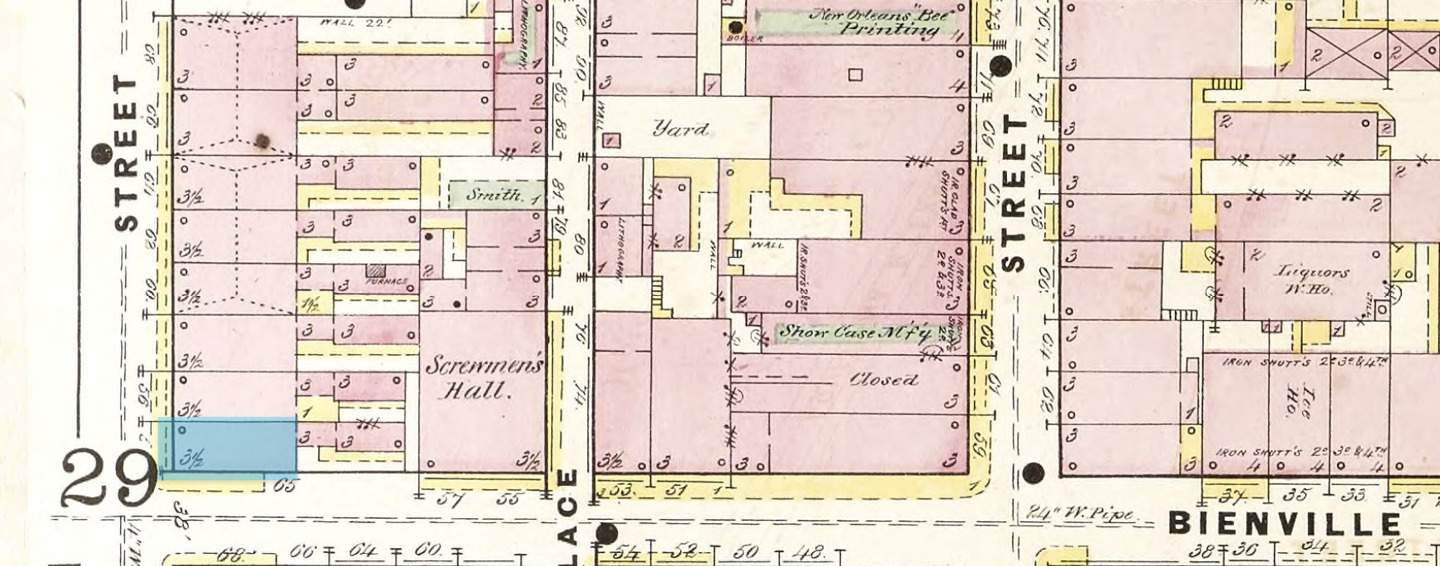
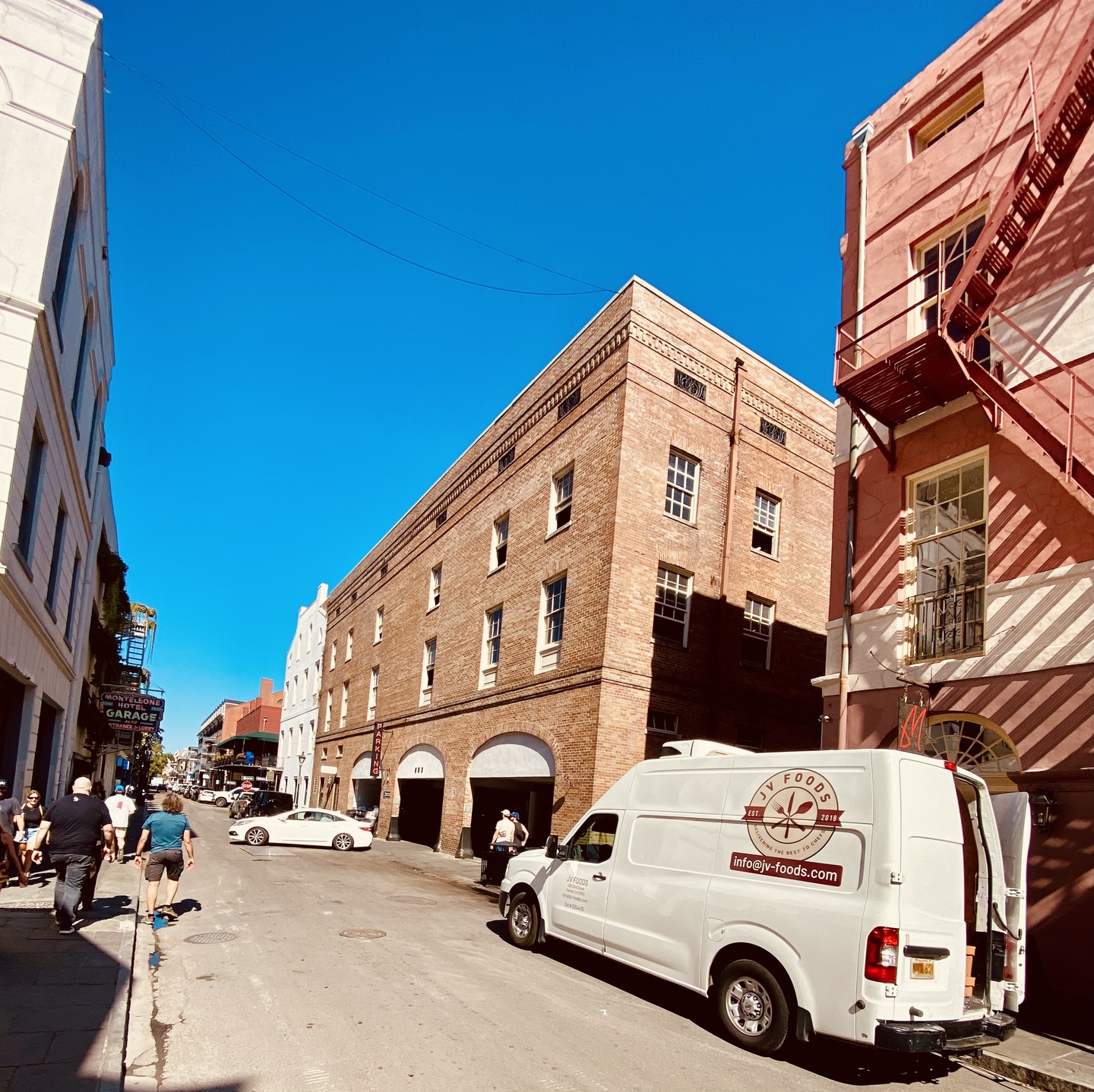
    <summary type="html"><![CDATA[<p><strong><em>It was the heart of where members debated the issues surrounding their trade. It was a place to get information, cast votes, and make plans. </em></strong></p><img src="https://acadianahistorical.org/files/fullsize/95ff8ccd615041bd2f260fa2fe7859d3.jpg" alt="Now For Parking" /><br/><p>The location of the  Screwmen's Benevolent Association's meeting hall changed a few times over the decades. Contemporary newspapers made references to areas instead of specific addresses. Because the readers knew the layout of the city, a general reference to where a building was located often sufficed. The only concrete location I could find is on a Sanborn Fire Insurance map from 1876. </p><p>At this site the Screwmen’s Benevolent Association members gathered to discuss wages, working conditions, and disputes with employers along the New Orleans waterfront. Meetings likely also included the everyday business of the society, from collecting dues and assisting sick or injured members to providing financial support for widows and families of deceased screwmen.</p><p>The meeting hall was located at the corner of Exchange Place and Bienville. The map shows that the three-and-a-half story meeting hall was a brick building with wooden frame construction on the two outer walls, indicating that there was a porch surrounding sides of the building facing both Exchange Place and Bienville Streets. </p><p>In 1929 the Monteleone Hotel bought the building from the Screwmen’s Benevolent Association for $21,000.  The Monteleone family tore the building down. The hotel still owns this corner of the landscape. They constructed a parking garage where the Screwmen's Benevolent Association meeting hall once stood.</p><p><em><strong><a href="https://acadianahistorical.org/items/show/189">For more (including 3 images) view the original article</a></strong></em></p>]]></summary>
    <published>2022-11-26T04:01:09+00:00</published>
    <updated>2026-10-11T20:32:02+00:00</updated>
    <link rel="alternate" type="text/html" href="https://acadianahistorical.org/items/show/189"/>
    <id>https://acadianahistorical.org/items/show/189</id>
    <author>
      <name>Laura M. Hughes</name>
    </author>
  </entry>
  <entry>
    <title type="html"><![CDATA[Site 7: First to Third Streets — The 1894 Waterfront Riot: Murder Comes to the Levee]]></title>
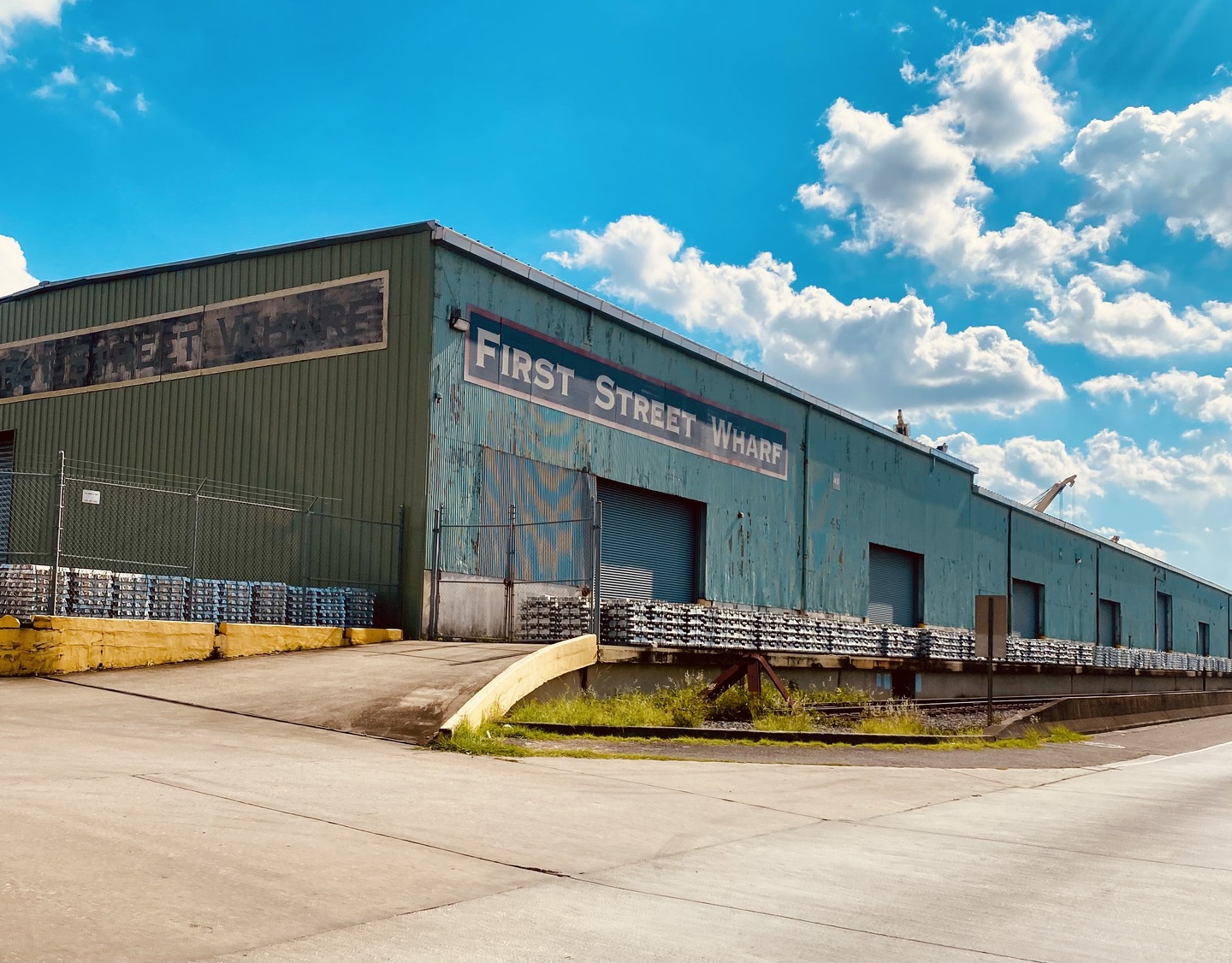
    <summary type="html"><![CDATA[<p><strong><em>Gun smoke mingled with steam rising from smokestacks of British ships docked along the levee. Rifle shots replaced the usual sounds of the port. The rattling of carts and longshoremen singing shanteys to lighten the tedious nature of the day's work went silent. In their place were the screams of victims who tried to escape the onslaught.</em></strong></p><img src="https://acadianahistorical.org/files/fullsize/1bc72113152abd1862c74cd922cf57dc.jpg" alt="Where It All Happened" /><br/><p>Imagine being so fearful for your life that your only chance to save yourself is to jump into a powerful river--even though you can't swim.</p><p>Despite the vandalism experienced on October 26, 1894, agents expected Black screwmen to continue loading cotton with borrowed tools. Although shipping bosses appealed to Mayor John Fitzgerald and the chief of police to provide protection, only 10 men showed up to work. The rest stayed away due to the large number of White screwmen lurking in the vicinity. The few Black men who decided to resume working would regret it. </p><p>Around 2:30 on the afternoon of October 27, members of the Screwmen's Benevolent Association, armed with Winchester rifles and stones, initiated a violent attack on the Black screwmen who gathered on the quay. The White screwmen made no effort to conceal their crimes. They fired more than 100 rounds while the policemen stood "idly by, like interested spectators."</p><p>Reports claim that the mob, "swooped down on the negroes with imprecations on thier lips and the desire for blood in their hearts." There was a large, open space at the head of First Street where the <i>Delano </i>was docked. It was in this area where the Black screwmen rushed off the ship and tried to find safety. Reporters from the <i>Times Picayune </i>describe them being "followed by a howling mob, who were indiscriminately shooting in all directions." </p><p>Men had no other choice but to dive off the deck of the ship, drowning in the rushing waters below. Randolph Blackwell was shot in the leg, arm, and thigh. Andrew Holmes, a Black man, 40 years of age, attempted to flee from the scene "at a good run" when White screwmen "emtied their pistols at him." </p><p>It is unknown how many Black screwmen jumped overboard and drowned. The newspaper stated that, "We won't know until the [river] gives up its dead."</p><p><em><strong><a href="https://acadianahistorical.org/items/show/185">For more (including 7 images) view the original article</a></strong></em></p>]]></summary>
    <published>2022-11-10T01:05:18+00:00</published>
    <updated>2026-10-11T20:30:56+00:00</updated>
    <link rel="alternate" type="text/html" href="https://acadianahistorical.org/items/show/185"/>
    <id>https://acadianahistorical.org/items/show/185</id>
    <author>
      <name>Laura M. Hughes</name>
    </author>
  </entry>
  <entry>
    <title type="html"><![CDATA[Site 1: Jonte Equen&#039;s Home — The Birth of the Association: The Screwmen&#039;s Benevolent Association Organized]]></title>
    <summary type="html"><![CDATA[<p><strong><em>On the evening of November 18, 1850, 121 screwmen put down their jackscrews and emerged from the dark, cramped hulls that they had been toiling in since early that morning. They made their way down the main thoroughfare to the home of Jonte Equen on Royal Street, where they discussed the best means “of uniting for purposes of mutual aid, relief, and protection.”</em></strong></p><img src="https://acadianahistorical.org/files/fullsize/ec443fc300918a5a2c6b56c28770b39d.jpg" alt="The Site on Sanborn" /><br/><p>A city adapts and adjusts to the growth of industry and each decade of change that it brings. As such, street names and building numbers change over the decades and centuries. In 1850, present-day Royal Street was named Casa Calvo. Jonte Equen’s home was at 51 Casa Calvo, which is now 300 Royal Street. </p><p>On November 18, 1850, after a long day compressing cotton bales into the holds of ships, 121 New Orleans screwmen gathered at the Royal Street home of Jonte Equen, near the Marigny neighborhood. They came to discuss forming an organization that would provide mutual aid, relief, and protection for men working one of the waterfront’s most demanding jobs.</p><p>Around November 25, 1850, eleven screwmen met to draft the bylaws of the Screwmen’s Benevolent Association and Equen’s home certainly continued to serve as an early gathering place for the organization.</p><p>Made up primarily of Irish and German immigrants, the association offered members support during illness, injury, and other hardships. It eventually became one of New Orleans’ most powerful labor organizations and helped establish organized labor on the city’s waterfront.</p><p>Equen’s home marks an important chapter in New Orleans labor history, when a group of waterfront workers came together to look after one another.</p><p>The home has long since been torn down and, is now a mid-1800s Greek Revival building with Creole commercial features. a wrought iron balcony located on the second floor, and the Royal Praline Company as a front facing tenant. Situated on the corner of Bienville and Royal Streets, the inside of the building is a far cry from what it must have been when it was Jonte Equen’s home. Bright and cheerful with large, tiled floors and yellow walls, the room boasts colorful confectionary; New Orleans’ delicacies such as beignet mix, chicory coffee, and of course, pralines. No one would ever guess that the first and strongest union in the South organized their association at the site where the Royal Praline Company now sits.</p><p><em><strong><a href="https://acadianahistorical.org/items/show/183">For more (including 5 images) view the original article</a></strong></em></p>]]></summary>
    <published>2022-11-05T22:58:33+00:00</published>
    <updated>2026-10-11T20:30:11+00:00</updated>
    <link rel="alternate" type="text/html" href="https://acadianahistorical.org/items/show/183"/>
    <id>https://acadianahistorical.org/items/show/183</id>
    <author>
      <name>Laura M. Hughes</name>
    </author>
  </entry>
</feed>