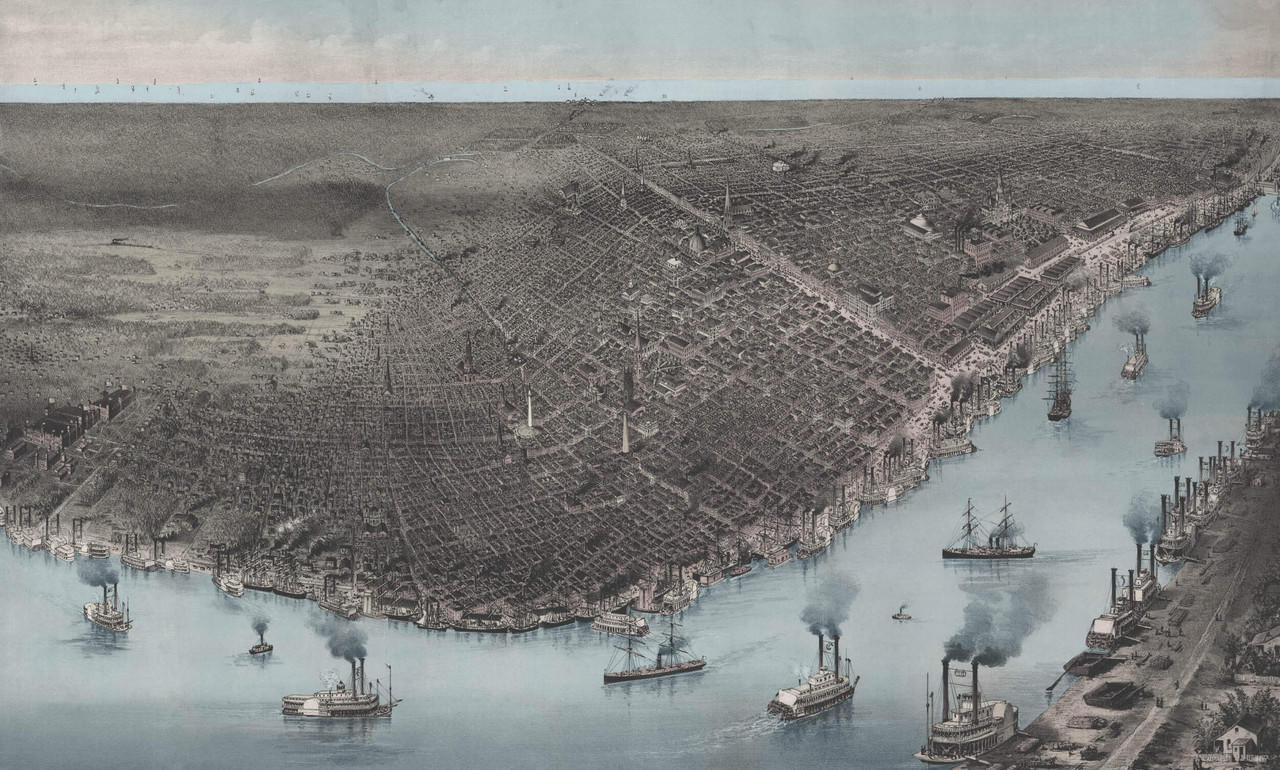
The bend in the Mississippi River is why New Orleans is famously called "The Crescent City."
Drawings and paintings from the 1800s show travelers watching the exciting action of the port. People came from miles around to watch the dockers loading and unloading cargo while singing shanteys. According to the journals of foreign travelers, the boisterous and sometimes unruly draymen were always a source of entertainment for onlookers. Hoping to contribute to their household finances, local women set up food stalls amongst the backdrop of the smokestacks, cotton bales, and other goods waiting transport to one of the many warehouses along the levee.
Today, guard shacks and barrier gates keep out anyone not associated with the business of the port. One wonders if the workers of today think about the history of the ground that they toil on. So many important moments occurred on that famous bend. One of which was vital to both the labor movement and race relations after the end of the Civil War.
Competition for work on the quay was exceptionally stiff after the end of the Civil War. White workers fought to keep their livelihoods while Black longshoremen, employable at cheaper rates than their white counterparts, fought to attain the security that gainful employment brings.
On December 21, 1865, newspapers reported a site never before seen on the levee. As the White screwmen strikers downed their tools and disembarked the ships, the Black workers followed suit and joined them marching along the levee.
It was a historic moment; the first time since the end of the Civil War that New Orleans witnessed an alliance between White and Black laborers. New Orleans Mayor Hugh Kennedy said that “I thought it an indication of progress when the white laborers and negroes on the levees the other day made a strike for higher wages. They marched up the levee in a long procession, white and black together…”
Due to safety concerns, the Port of New Orleans cordoned off the bend in the river where the first interracial protest took place. Tourists can view the site from the Vue Orleans outdoor observation deck, 34 floors above New Orleans.
]]>