John James Audubon Memorial Bridge: A Bridge of the Birds
John James Audubon was an influential figure in American ornithology, wildlife art, and natural science during the late eighteenth and early nineteenth centuries. However, even for his time, he was a controversial figure due to his shady academic practices and racism. Despite these darker aspects of his past, many organizations and locations across the country bear Audubon's name today to celebrate America's natural beauty and environmental conservation. The John James Audubon Bridge is no different.
Text
The John James Audubon Memorial Bridge lies along Louisiana State Route 10, northwest of Baton Rouge. The bridge connects West Feliciana Parish to Pointe Coupee Parish, and its construction was completed in 2011. The structure was named after John James Audubon, who was an influential, American naturalist in the late nineteenth and early twentieth centuries.
Born in 1785, John James Audubon was the illegitimate child of Jeanne Rabine and Lieutenant Jean Audubon. Audubon was raised on his father’s sugar plantation until he was moved to France. He received a high-quality education, learning to ride, fence, dance, and play multiple musical instruments. In his free time, Audubon roamed the woods near his home, collecting and drawing the objects that caught his attention. He gained a particular interest in birds and began drawing the eggs, nests, and habitats of these creatures. Audubon’s father wanted his son to join the French Navy, so he sent him to a military school when he was twelve. However, working on the sea was not Audubon’s forte. He was not interested in mathematics and navigation, and working on the sea quickly made him seasick. Audubon failed his officer’s qualification test, so he had to return home, now free to pursue his true interest—birds and nature.
Audubon moved to America in 1803, and in 1808, he married Lucy Bakewell. After his marriage, Audubon spent several years traveling across America, painting the various species of birds he came across while moving between jobs. At the end of his travels, Audubon created his magnum opus—Birds of America. This series of artworks contained 453 life-sized paintings of North American birds, which were praised for their accurate and life-like depictions of their subjects. However, some of these works were met with controversy.
Audubon claimed that he discovered a new species of North American eagle named the “Bird of Washington” or Falco washingtonii. He published this discovery in 1826, which was a pivotal moment in his career, and without it, the Birds of America would never have taken flight. However, despite the importance of this bird to his success, Audubon was never able to produce a specimen that fit with his description and rendition even though he claimed he used a specimen he shot as a reference.
Additionally, several of Audubon’s works have been accused of plagiarism. These paintings were eerily similar to the drawings of another American ornithologist who preceded Audubon named Alexander Wilson. Audubon’s allegedly plagiarized works share similarities in composition and posing with Wilson’s drawings. When compared side-by-side, Audubon’s renderings were practically the same as Wilson’s, and the main difference between the works was that Audubon’s images were magnified and flipped.
Despite the controversies surrounding him, including his racist beliefs, John James Audubon is remembered as a pillar in American ornithology, wildlife art, and natural history. Many country-wide organizations and institutions now bear his name, and they have grappled with the fact that their namesake was a complicated figure. However, that issue does not stop these groups from continuing their pledge to protect and conserve America’s natural beauty and bird populations. Unfortunately, other locations and institutions choose to remember Audubon only for the Birds of America, allowing his muddier history to fade into obscurity, and the John James Audubon Memorial Bridge is no exception.
Files
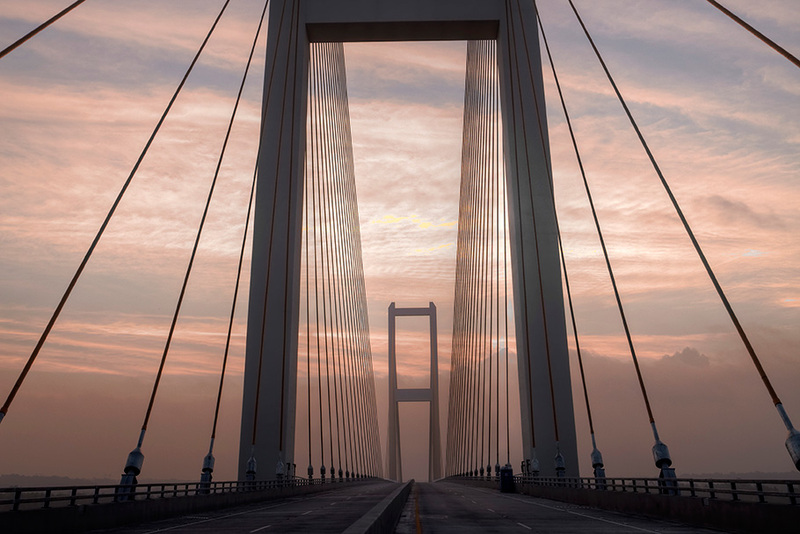
John James Audubon Memorial Bridge
A picture on the John James Audubon Bridge at sunset. | Source: https://www.flatironcorp.com/project/john-james-audubon-bridge/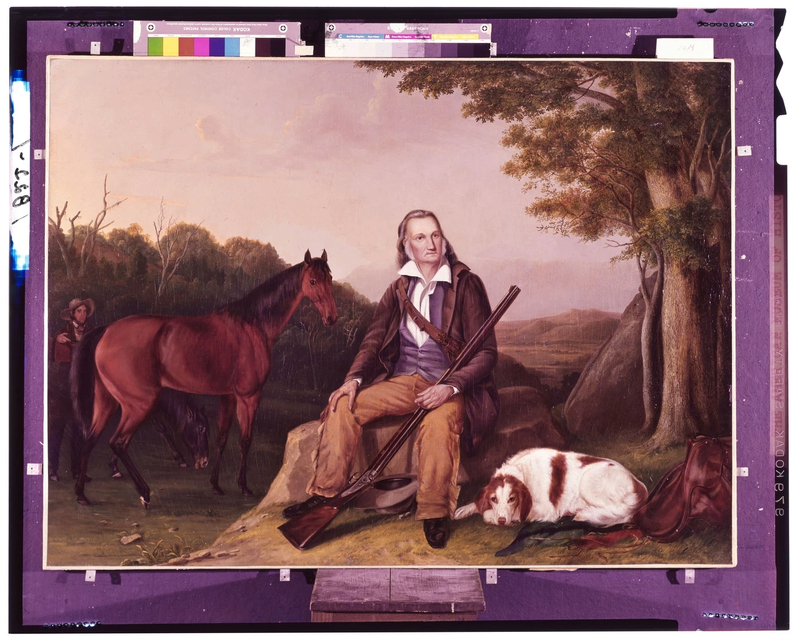
Audubon the Naturalist
An oil painting of John James Audubon in his older years, posing with his dog and rifle. This work was completed three years before he died in 1851. | Source: https://www.audubon.org/news/the-myth-john-james-audubon | Date: 1848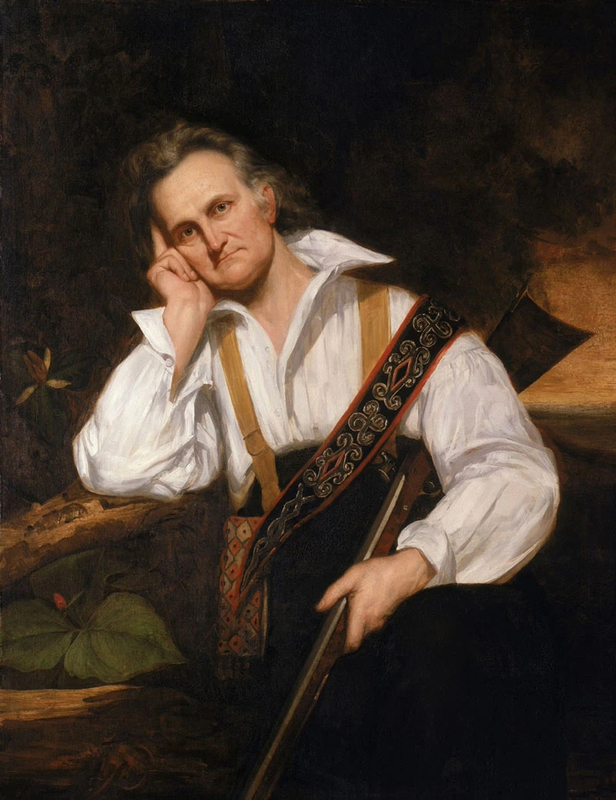
John James Audubon
A painting of John James Audubon, posing with his rifle. | Source: https://www.audubon.org/content/john-james-audubon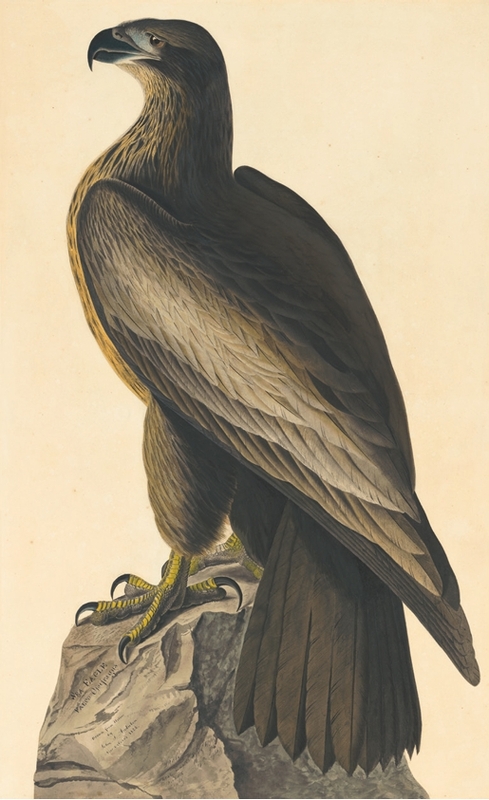
Bird of Washington
This is the painting of the infamous "Bird of Washington" or "Sea Eagle" that Audubon claimed to have discovered and included in his Birds of America. Academics have speculated that Audubon used this dubious find to appeal to wealthy British patrons to fund and publish his work. | Source: https://doi.org/10.25226/bboc.v140i2.2020.a3 | Date: 1827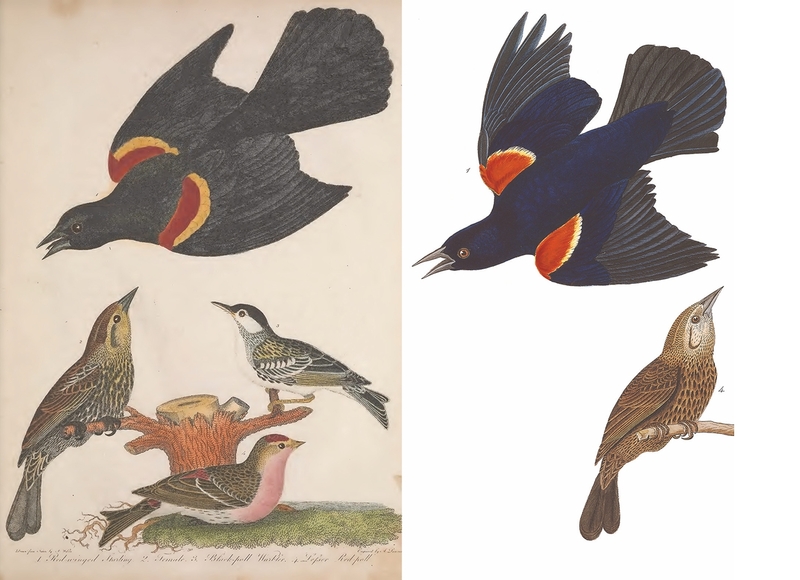
Red-winged Blackbird Painting Comparison
A picture comparing the red-winged blackbird paintings of Alexander Wilson (left) and John James Audubon (right). The poses and composition of the two images are almost identical. The main difference between the two images is that Audubon's rendition includes more accurate proportions and detail. | Source: https://doi.org/10.25226/bboc.v140i2.2020.a3.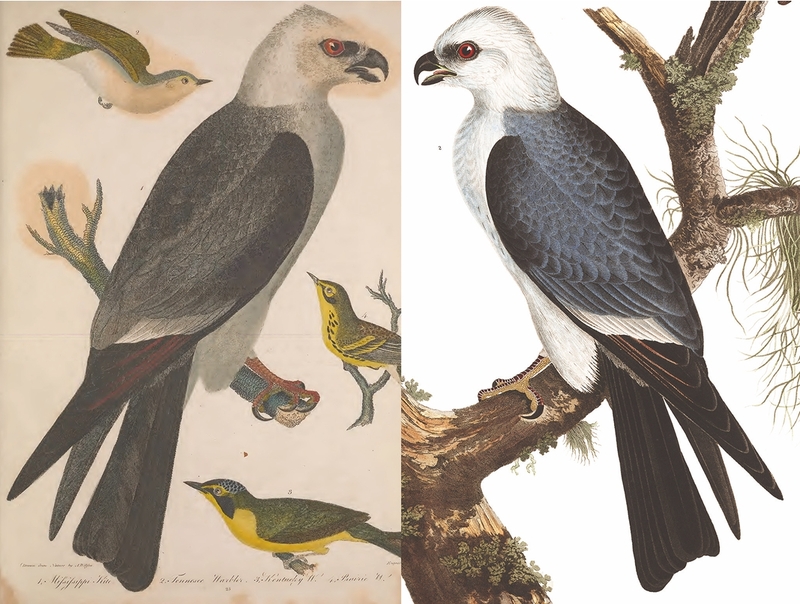
Mississippi Kite Comparison
A picture comparing the Mississippi kite paintings of Alexander Wilson (left) and John James Audubon (right). These images mirror one another, and if this image was folded down the middle, the Mississippi kite's pose would almost line up perfectly with the opposite side. | Source: https://doi.org/10.25226/bboc.v140i2.2020.a3.