The Barrow Approach: A Lesson in Leadership
A young man from St. Francisville would join the Marine Corps in 1942. He would lead men through the jungles of China & Vietnam, and up frostbitten hills in Korea. Forty one years later, he would retire a decorated General, having helped modernize the Marine Crops for the later half of the 20th century.
Text
Among Louisiana’s highways dedicated to both police and military service members, there is a bridge that stands out in both its grandiosity and in its acknowledgement of two US generals. The John James Audubon Bridge is named after the titular French-American artist and ornithologist, but also honors two of Louisiana’s preeminent military servicemen. The first of which is Lieutenant General John A. Lejeune, from Pointe Coupee Parish. The second man is General Robert H. Barrow, from West Feliciana Parish. Though the bridge itself does not bear their namesake, the west and east approaches to the bridge do, respectively. This bridge also happens to connect both parishes from which these two American servicemen are from, and replaces the ferry which acted as the main crossing between New Roads, the seat of Pointe Coupee Parish, and St. Francisville, the seat of West Feliciana Parish. The eastern approach, known as the General Robert H. Barrow Memorial Approach, serves to honor and carry on the legacy of one of most distinguished US marines of the 20th century.
General Barrow’s was born on February 5th, 1922 in Baton Rouge, LA. By the age of 21, after attending LSU for a few years, he enlisted with the Marine Corps as a Second Lieutenant. Barrow served in the interior of China fighting against the Japanese during WWII. Leading less than 5 American soldiers and many more Chinese, Barrow described this part of his service as one of the most vivid and influential in his career., in large part due to the independance he was given. He would go on to command troops in Korea and play a part in the taking of Hill 1081 in the Battle of Chosin Reservoir, resulting in a total victory for the United Nations forces. In Vietnam, barrow would again command Marines into battle. This time, he would be instrumental in OPERATION DEWEY CANYON, which would push North Vietnemese forces back to the Laotian border.
After fighting and leading in three wars, Barrow would now begin a long and successful commandancy in the Marine Corps. First promoted to Brigadier General in 1969 in the aftermath of OPERATION DEWEY CANYON, then to a Major General in 1972, and finally to a Four Star General in 1978, Barrow's leadership of the Marine Corps would be one of the hallmarks of his career and life. General Barrow gave credit to his predecessor across the Mississippi, John A. Lejeune, in that his influence on creating the modern Marine Corps had a large impact on him and his success. It is quite fitting that in 2011, a bridge was built that not only connected the two communities where these two men were from, but also honors them both in the naming of its approaches after them.
Files
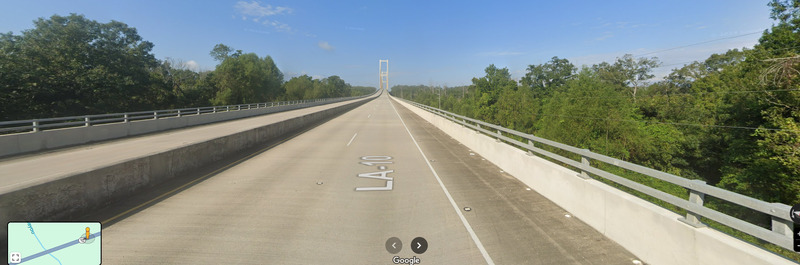
The General Robert H. Barrow Memorial Approach
The titular approach to the John James Audubon Bridge, which connects West Feliciana Parish with Pointe Coupee Parish. | Source: https://www.google.com/maps/@30.7237929,-91.3401509,3a,75y,256.05h,90.56t/data=!3m7!1e1!3m5!1sty2f3WXHwcFdFZFqpCet8A!2e0!6shttps:%2F%2Fstreetviewpixels-pa.googleapis.com%2Fv1%2Fthumbnail%3Fcb_client%3Dmaps_sv.tactile%26w%3D900%26h%3D600%26pitch%3D-0.5582128529028694%26panoid%3Dty2f3WXHwcFdFZFqpCet8A%26yaw%3D256.0479709660379!7i16384!8i8192?entry=ttu&g_ep=EgoyMDI1MDQwNi4wIKXMDSoASAFQAw%3D%3D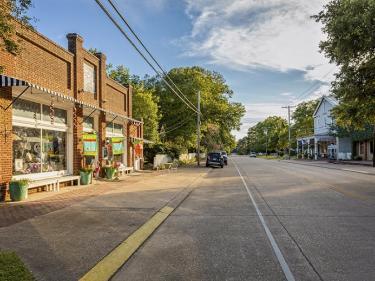
Modern Day Main Street of St. Francisville
The main street of St. Francisville, a community General Barrow grew up in, died in, and in which the Memorial Approach named after him ultimately leads to. | Source: https://www.louisianamainstreet.org/st-francisville-main-street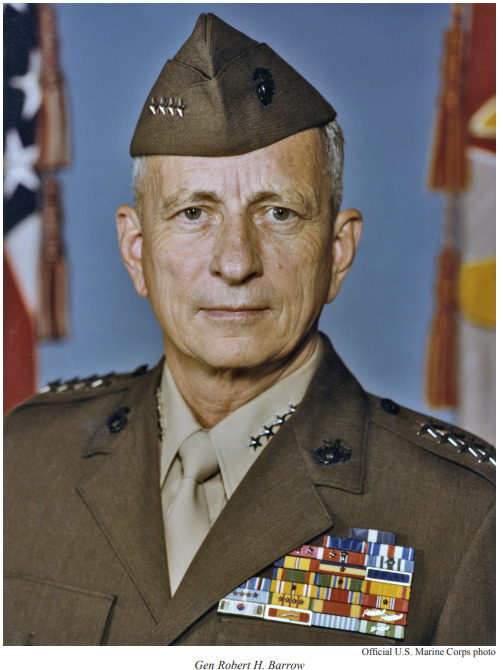
General Robert H. Barrow
An official Marine Corps photo of General Robert H. Barrow. | Source: https://www.usmcu.edu/Portals/218/Robert%20H_%20Barrow.pdf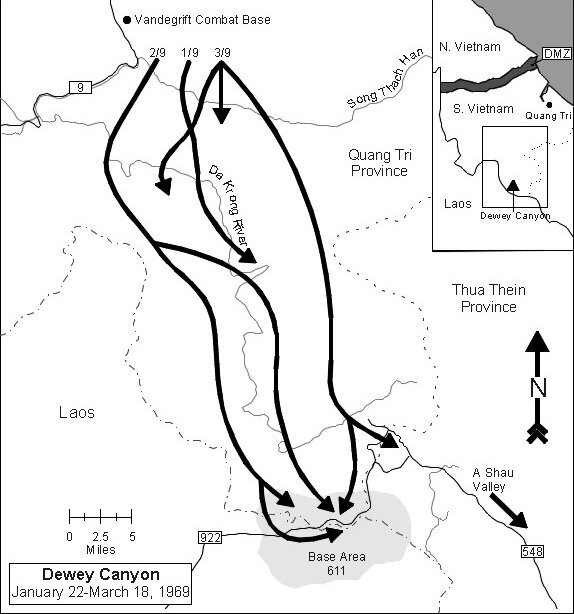
A Map of OPERATION DEWEY CANYON
A map of the Operation conducted by General Barrow. The success of which contributed to the celebrated Marine he became. | Source: https://en.wikipedia.org/wiki/Operation_Dewey_Canyon#/media/File:Operation_Dewey_Canyon_map.jpg
File #1963: [Untitled]
Map
The section of Louisiana Highway 10 ranging from U.S. Route 61 to the John James Audubon Bridge.