LA Airborne Memorial Bridge: The Gateway to Acadiana
The LA Airborne Memorial Bridge consists of twin spans along I-10 that connect Baton Rouge to Acadiana. It stands as a symbol of Louisiana’s expansion.
Text
The Atchafalaya Basin is a testament to Louisiana’s economic, ecological, and cultural significance. Spanning millions of acres, it is the largest swamp in the United States. The basin also serves as a vital corridor along Interstate 10, connecting Acadiana to Baton Rouge and eastern Louisiana. Despite its many resources, it has posed challenges for travel for decades. As a result, the Atchafalaya Basin Bridge was built.
The Atchafalaya Basin Bridge is a pair of twin bridges that run east and west through South Louisiana. The bridge serves as a gateway along Interstate 10, connecting Lafayette to Baton Rouge. Before the bridge was constructed in 1971, traveling to Baton Rouge took approximately three hours, while reaching New Orleans took about four hours. In the early 1900s, crossing the basin required water transportation, such as ferries.
Between 1906 and 1911, the Southern Pacific Railroad Company constructed a railway known as the Baton Rouge Branch, which crossed the Atchafalaya Basin. Its purpose was to provide a shorter route to eastern parts of Louisiana and to transport freight across the basin. The railway operated for sixteen years before being destroyed by the flood of 1927. Efforts to repair it were unsuccessful, and the line was eventually abandoned. Today, remnants of the railroad can still be seen within the swamps.
In the 1950s and 1960s, Louisiana’s interstate system was under development. Civil engineers needed to find a solution that would allow direct access across the Atchafalaya Basin. Before construction of the bridge could begin, engineers had to explore the basin to identify a stable foundation. This process was lengthy and took several years. During their research, engineers discovered nearly ninety feet of mud before reaching layers of sand that were stable enough to support the bridge’s pillars.
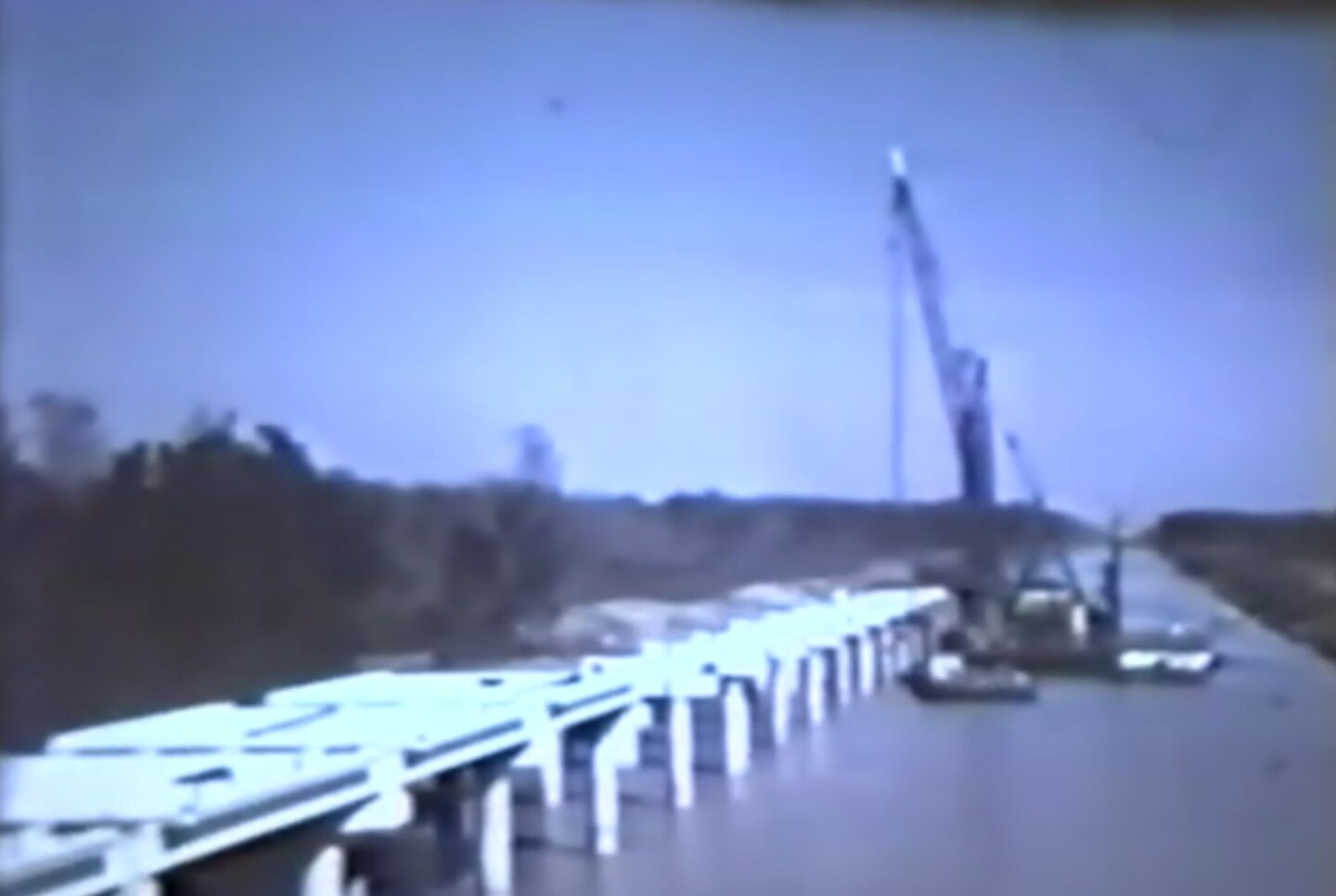
In 1971, construction of the Atchafalaya Basin Bridge began, and it was completed two years later, in 1973. The structure consists of twin spans that stretch 18.2 miles, with pillars driven approximately 140 feet deep. At the time of its completion, the Atchafalaya Basin Bridge was the second-longest bridge in the United States; today, it ranks as the third longest. It is surpassed by the Lake Pontchartrain Causeway and the Manchac Swamp Bridge, both of which are slightly longer.
After the bridge opened, travel times to Baton Rouge and New Orleans were significantly reduced, with trips taking about two to three hours instead of four.
Since the 1970s, the bridge has been known as the Atchafalaya Basin Bridge because it spans the basin. During the 1980s, there were efforts to name infrastructure after military personnel. In 1989, the bridge was officially renamed the Louisiana Airborne Memorial Bridge (LA Airborne Memorial Bridge). It was renamed on July 10, 1989, to honor the United States Army’s 82nd Airborne Division. The bridge serves as a tribute to all members and veterans of the United States Airborne Forces, including those who served in World War II.
Today, approximately 30,000 vehicles cross the bridge each day. Over the years, it has played an important role for many Louisianans, supporting the expansion of the state’s infrastructure and Acadiana’s economy. The bridge carries a significant volume of materials along Interstate 10 in both eastbound and westbound directions and serves as a vital link to several industries within Louisiana.
It also connects ports along the Gulf Coast, facilitating maritime logistics. In addition, the bridge contributes to Louisiana’s tourism industry by providing access to the Atchafalaya Welcome Center and recreational activities within the basin. Activities such as fishing, boating, and swamp tours generate revenue for local businesses.
While the bridge is widely recognized for its importance, it is also known for motor vehicle accidents. Heavy traffic makes it a particularly dangerous location for collisions, and when accidents occur, they can cause severe congestion. Since 2014, the Atchafalaya Basin Bridge has been the site of more than 1,000 accidents, some of which have resulted in 15 fatalities. On average, about 197 accidents occur each year.
Efforts have been made to improve safety on the bridge. For example, in 1998, the speed limit was reduced from 70 miles per hour to 60.To further reduce accidents, several laws and regulations are enforced for those traveling on the bridge. Speed limit signs are installed to alert drivers when they are exceeding the limit. In addition, 18-wheelers and commercial trucks are prohibited from using the left lane and are required to remain in the right lane for the entire 18-mile span. Louisiana State Troopers are also present on the bridge to monitor traffic.
In recent years, Louisiana legislators proposed installing an automated camera system that would issue tickets to drivers who crossed the bridge in under eighteen minutes. However, between 2024 and 2026, the proposal was abandoned, and local law enforcement continued to monitor traffic on the basin.
The Atchafalaya Basin Bridge, also known as the LA Airborne Memorial Bridge, is one of the most notable man-made structures in Louisiana. It carries a rich history that is significant to the state. The bridge is more than just a link between Acadiana and Baton Rouge; it is a symbol of Louisiana’s growth and expansion.
Files
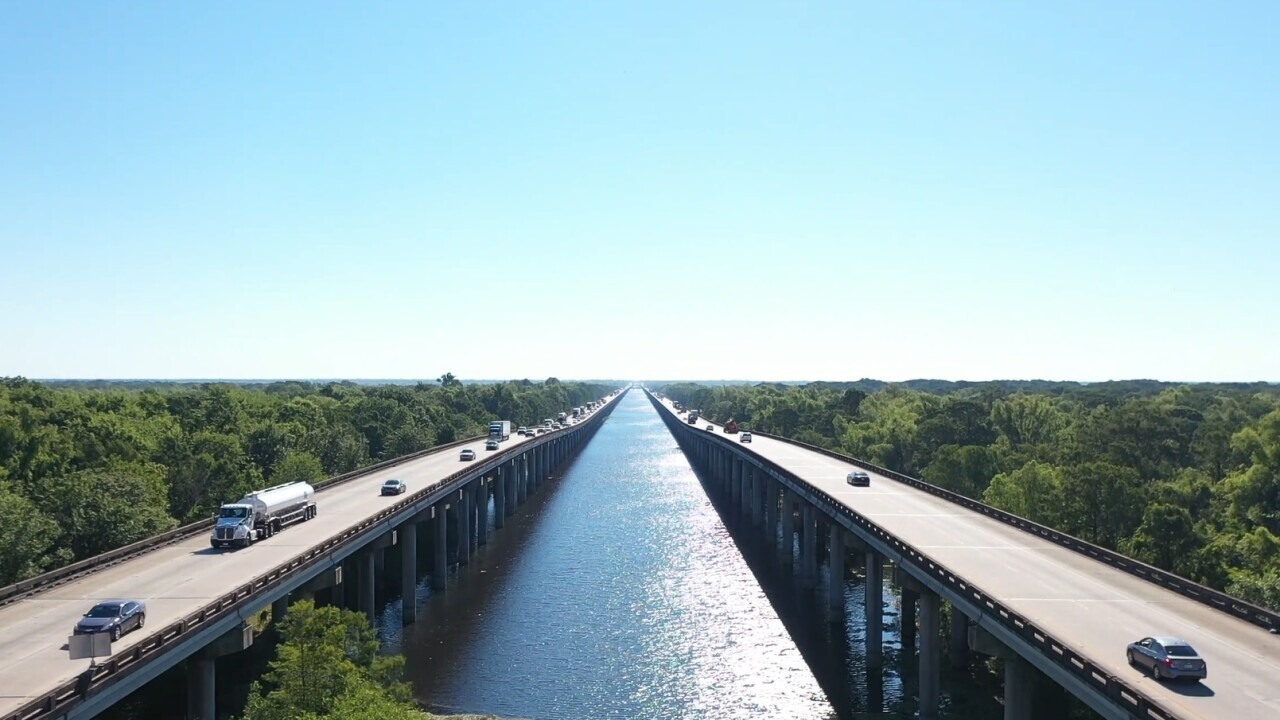
LA Airborne Memorial Bridge
Photo by: KATC I-10 Atchafalaya Basin Bridge | Source: https://www.katc.com/community/gma-dave-trips/gma-dave-trips-atchafalaya-basin-bridge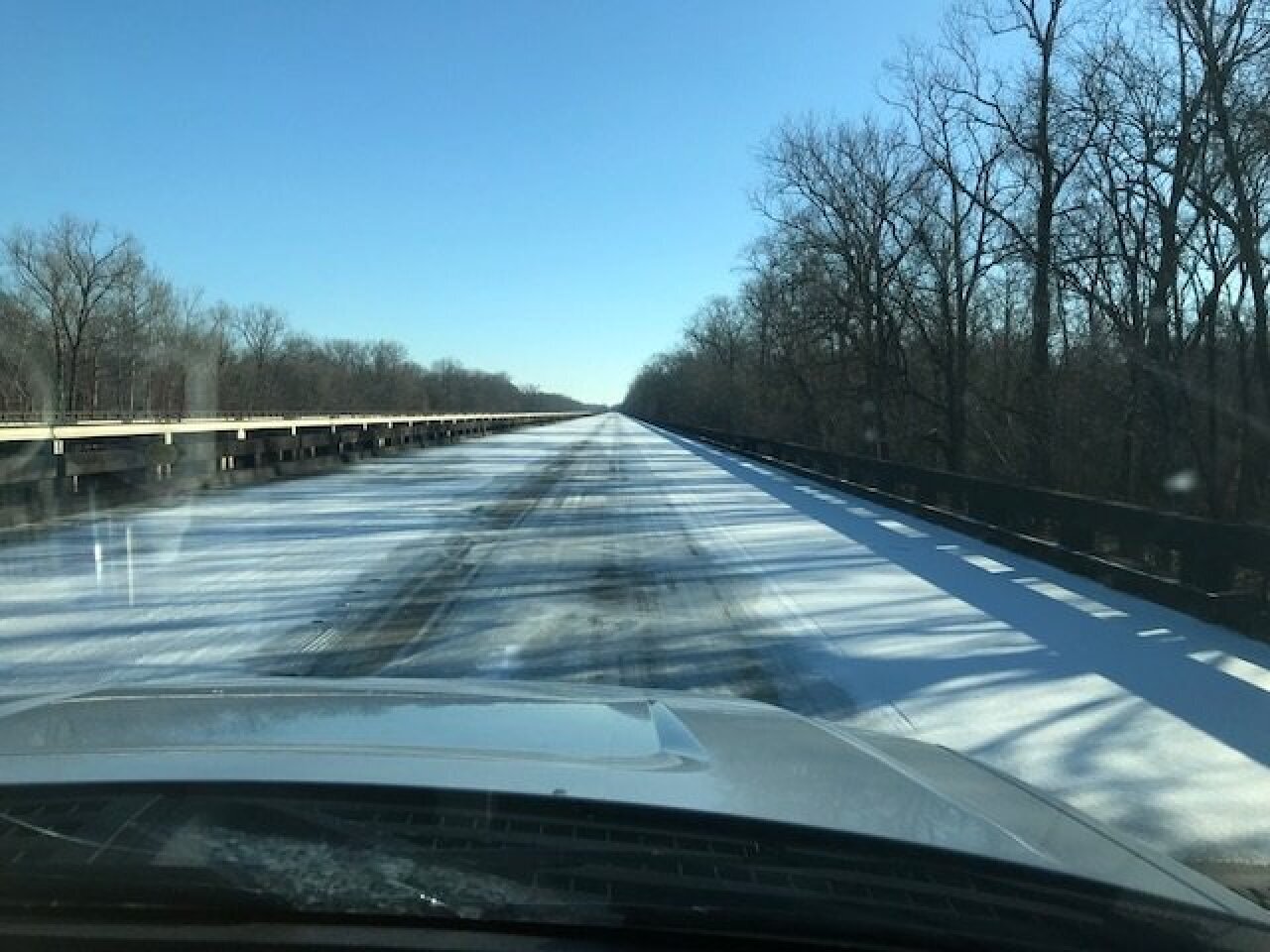
LA Airborne Memorial Bridge
Freezing rain coats the I-10 bridge over the Atchafalaya, closing it for days. c. 2021 | Source: https://www.katc.com/community/gma-dave-trips/gma-dave-trips-atchafalaya-basin-bridge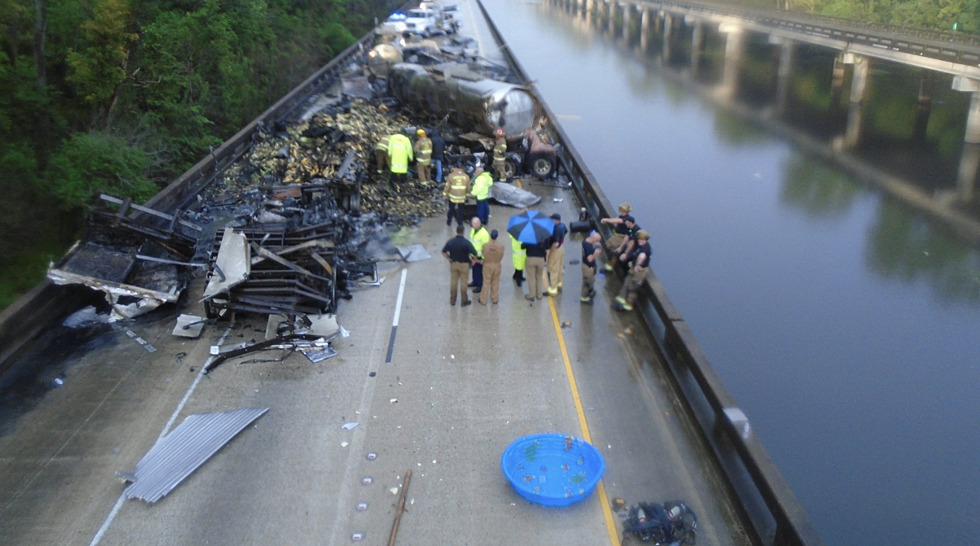
LA Airborne Memorial Bridge
Traffic Accidents On The Atchafalaya Basin Bridge | Source: https://1033thegoat.com/atchafalaya-basin-bridge-facts-louisiana/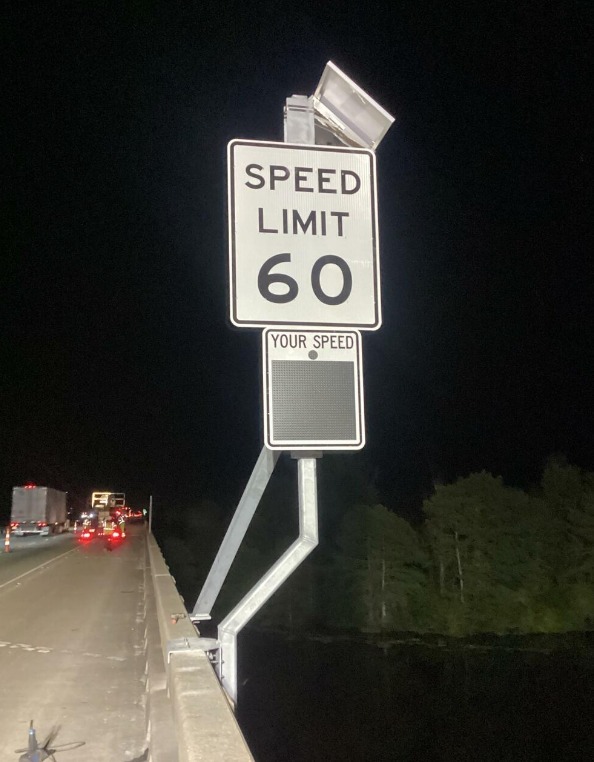
LA Airborne Memorial Bridge
Atchafalaya Basin Bridge feedback signs in place, speed limit is 60 for all vehicles. c. 2024 | Date: https://www.facebook.com/LADOTD/posts/atchafalaya-basin-bridge-feedback-signs-in-place-speed-limit-is-60-for-all-vehic/888958939933306/
The Atchafalaya Basin
Louisiana Department of Transportation and Development: Clearing the area where the future Atchafalaya Basin Bridge will be built | Source: https://www.katc.com/community/gma-dave-trips/gma-dave-trips-atchafalaya-basin-bridge