Site 9: St. Roch Cemetery — The Society Tomb: Screwmen's Benevolent Association at Work
Text
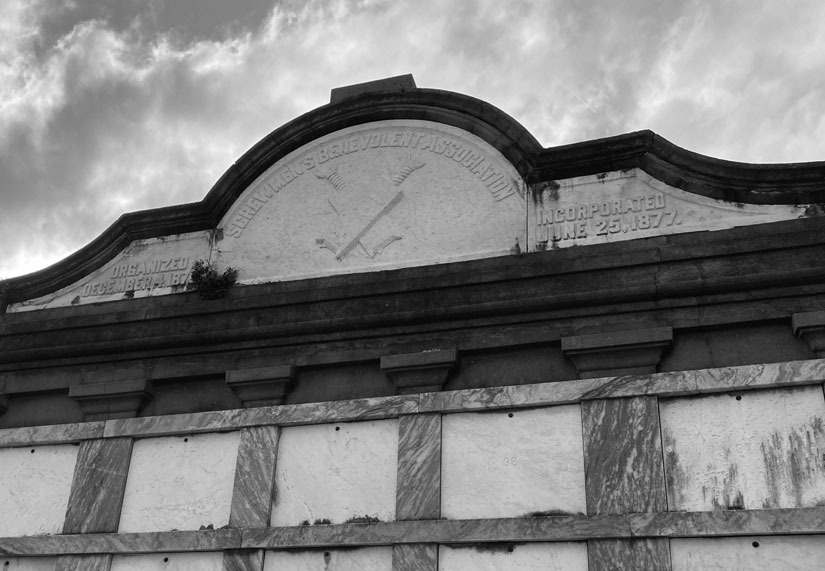
Today, the Society Tomb of the Screwmen’s Benevolent Association in St. Roch Cemetery No. 1 stands as the only known public monument in New Orleans to the screwmen who once played such an important role on the city’s waterfront. For generations, these highly skilled laborers used jackscrews to tightly pack cotton into the holds of ships, helping make New Orleans one of the world’s great cotton ports. Despite their importance to the city’s economy and waterfront culture, remarkably little remains to commemorate their work. The society tomb is a rare physical reminder of a profession—and a community of working men—that was once a familiar part of life along the New Orleans levee.
Although graves and cemeteries are generally excluded from the National Register of Historic Places because a person’s burial site is not necessarily connected to their achievements in life, the Screwmen’s Benevolent Association tomb at St. Roch Cemetery offers something that historic buildings and documents often cannot. Standing before it provides a tangible, deeply human connection to the men whose labor, struggles, and solidarity helped build New Orleans into one of the nation’s great ports, reminding us that behind the history of commerce and industry were ordinary people whose lives and contributions deserve to be remembered.
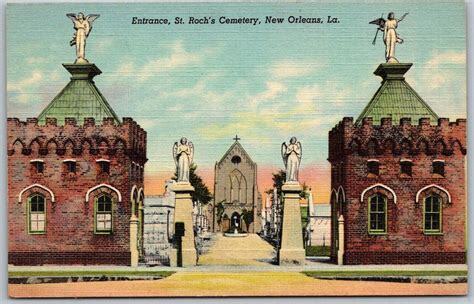
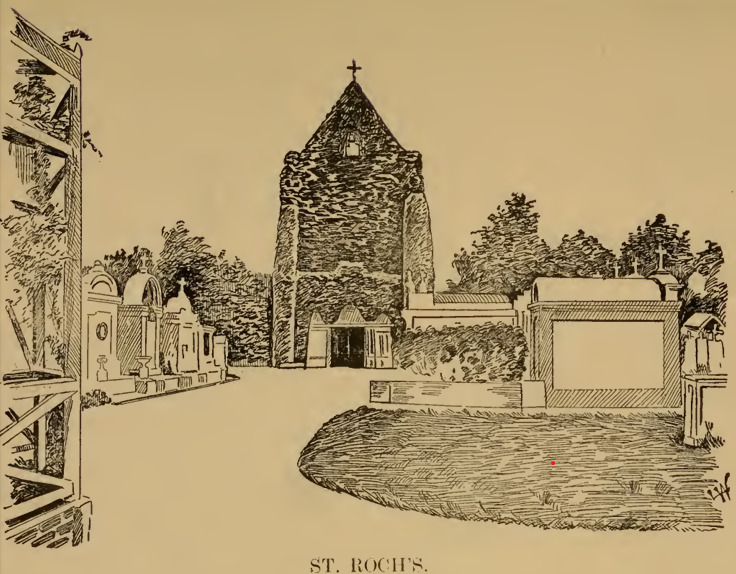
St. Roch Cemetery No. 1 reflects the deep connections among faith, immigration, disease, and death in nineteenth-century New Orleans. The cemetery was established in 1874 by Father Peter Leonard Thevis, pastor of Holy Trinity Church, to serve the parish’s predominantly German Catholic congregation.
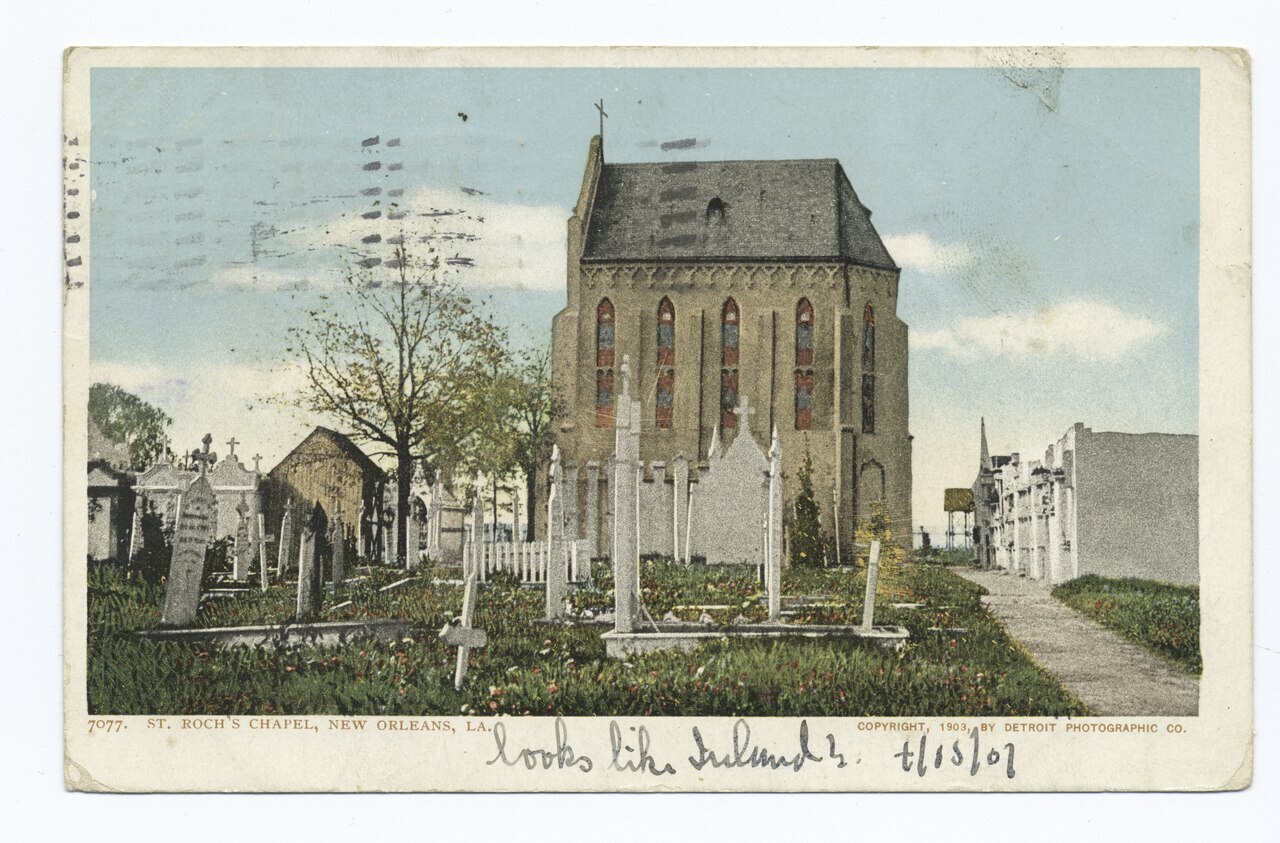
The cemetery’s origins are closely tied to New Orleans’s long struggle with yellow fever. During the epidemic of 1867, Thevis prayed to St. Roch, the Catholic saint traditionally invoked for protection against plague and disease, asking that his parishioners be spared. The cemetery was dedicated on September 6, 1875, when the cornerstone of the small chapel was laid. The completed chapel was formally dedicated on August 16, 1876, the feast day of St. Roch.
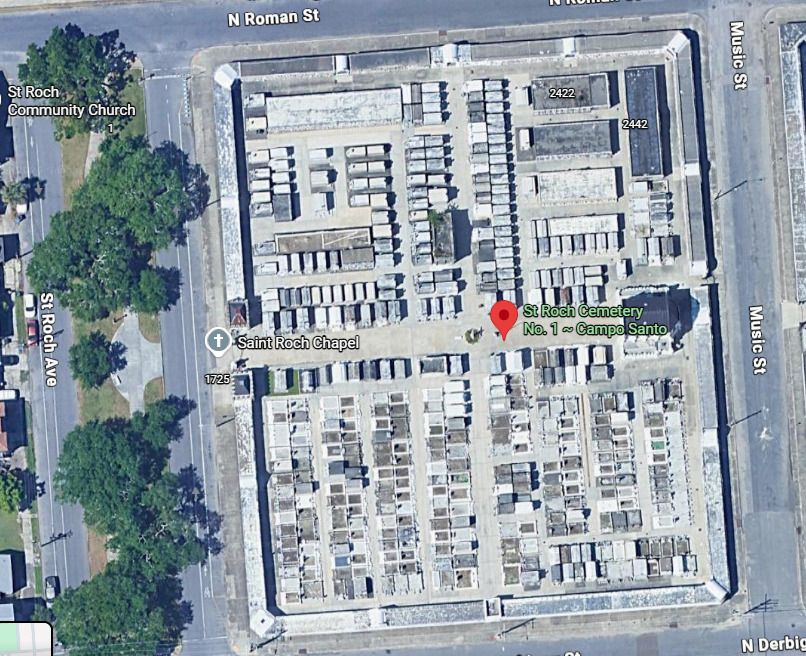
Early burials were often simple in-ground graves marked by wooden crosses, while masonry tombs initially lined the central avenue leading to the chapel. Gradually, the above-ground tombs, wall vaults, religious statuary, and orderly pathways created the distinctive landscape seen today. In this way, St. Roch Cemetery No. 1 preserves not only the history of a neighborhood, but also the religious traditions and experiences of New Orleans’s nineteenth-century immigrant communities.