<?xml version="1.0" encoding="UTF-8"?>
<feed xmlns="http://www.w3.org/2005/Atom">
  <title type="text">Acadiana Historical</title>
  <updated>2026-03-04T22:42:51+00:00</updated>
  <generator uri="http://framework.zend.com" version="1.12.20">Zend_Feed_Writer</generator>
  <link rel="alternate" type="text/html" href="https://acadianahistorical.org/"/>
  <link rel="self" type="application/atom+xml" href="https://acadianahistorical.org/items/browse?output=rss2"/>
  <id>https://acadianahistorical.org/</id>
  <author>
    <name>Acadiana Historical</name>
    <uri>https://acadianahistorical.org</uri>
  </author>
  <link rel="hub" href="https://pubsubhubbub.appspot.com/"/>
  <entry>
    <title type="html"><![CDATA[Who Dare the Hoodoo Lady : Julia Brown ]]></title>
    <summary type="html"><![CDATA[<img src="https://acadianahistorical.org/files/fullsize/77b4eb976751d91aa86f63b451c8bdcd.jpg" alt="[Untitled]" /><br/><p>In Acadiana’s St. John parish, Julia Brown was a Hoodoo priestesses lived in a very small town called Frenier surrounded by Manchac Swamp. “In the town Julia was known for her charms and her curses, as well as for singing eerie songs with her guitar on her porch (Lovejoy).” People went to her often but started to take her for granted, and after a while they noticed Julia’s change of change of character. “She started to scare the ungrateful locals by predicting when terrible things were about to happen to them (Matthews).” She also knew that her death was near and so she spent her last days on her porch singing, “One day I’m gonna die, and I’m gonna take all of you with me (Scott).”  Soon everyone found out what she meant.</p><p>On September 29, 1915 Julia died and the town gathered together to bury her. As they were putting her casket into the ground heavy hurricane rains interrupted forcing them back into their homes. It wiped out the entire town and proved that Julia’s ranting was all truth as there were no survivors. Today the grounds of Frenier is a mass grave hunted by Julia brown. 						</p><p><em><strong><a href="https://acadianahistorical.org/items/show/59">For more (including 4 images) view the original article</a></strong></em></p>]]></summary>
    <published>2018-04-30T21:16:02+00:00</published>
    <updated>2026-03-04T22:42:47+00:00</updated>
    <link rel="alternate" type="text/html" href="https://acadianahistorical.org/items/show/59"/>
    <id>https://acadianahistorical.org/items/show/59</id>
    <author>
      <name>Alyssa Dottery</name>
    </author>
  </entry>
  <entry>
    <title type="html"><![CDATA[The Church that Started a City: Saint Mary Magdalen Church – Abbeville, LA]]></title>
    <summary type="html"><![CDATA[<p><strong><em>The city of Abbeville owes its origins to the founder of St. Mary Magdalen Church.</em></strong></p><img src="https://acadianahistorical.org/files/fullsize/df5c1d30194633563c63a2e601a35f93.jpg" alt="St. Mary Magdalen Cemetery" /><br/><p>The expansive, star-studded church that towers over downtown Abbeville is integral to the very existence of the city. Abbe Megret, the pastor of St. John the Evangelist at the time, established St. Mary Magdalen parish in 1842 in an effort to remove himself from the grip of the board of church trustees in Vermilionville. Abbe Megret purchased a large tract of land; some was reserved for church property, and the rest was “divided…into lots and sold,” forming the nucleus of the town of Abbeville, named after the church’s founder (Oubre 28).</p><p>For much of the church’s existence, it was staffed by foreign francophone priests; however, a Cajun clergyman, Father Joseph Verbis Lafleur, stands out in its history as a figure who has risen to national attention (“Our History”). Lafleur’s first assignment was to St. Mary Magdalen church; he later became a military chaplain during World War II. He was captured as a prisoner of war and died when the Japanese ship on which he was detained was attacked. For his heroism, he has earned military honors, and his cause for canonization may soon be opened (O’Neel). The history of St. Mary Magdalen demonstrates the centrality of the Church to early Acadian towns and traces the evolution of Acadiana as a mission territory to a Diocese with many native vocations.</p><p><em><strong><a href="https://acadianahistorical.org/items/show/63">For more (including 4 images&#32;&amp;&#32;1 audio file) view the original article</a></strong></em></p>]]></summary>
    <published>2018-05-02T20:48:49+00:00</published>
    <updated>2026-03-04T22:42:47+00:00</updated>
    <link rel="alternate" type="text/html" href="https://acadianahistorical.org/items/show/63"/>
    <id>https://acadianahistorical.org/items/show/63</id>
    <author>
      <name>Briley Higginbotham</name>
    </author>
  </entry>
  <entry>
    <title type="html"><![CDATA[Rip Van Winkle Gardens]]></title>
    <summary type="html"><![CDATA[<img src="https://acadianahistorical.org/files/fullsize/e6dad6ab51bcd0dbe99447e275368e8a.jpg" alt="[Untitled]" /><br/><p>	Joseph Jefferson, a famed actor for his role in Rip Van Winkle, owned the Rip Van Winkle Gardens property. It was sold to Dr. Don Ray who renovated the gardens to its original beauty. He then sold it to Mike Richard, who is the current owner. The history behind this location is unbelievable! The calculations of where a crew should drill for something were a few inches off, and hit a salt dome which vanished into thin air. The entire estate was under water within a span of three hours! Today, the entire estate can be toured, but the story doesn’t just stop at its history. Along one tour, a girl was spotted in the middle of the hallway, and then she walked straight through the wall and vanished! Since the first discovery, her shyness has faded as she has been reported more frequently over recent years—especially from the maid working there. She explained that one night while alone in the kitchen storage, she tried to summon the girl by talking to her. As soon as the ghost realized she was being recognized, Styrofoam cups began FLYING. Other ghostly incidents have been reported—a slender figure appearing throughout the mansion, television remotes literally flying off of desks, and sounds of a woman crying have been heard with no person to be found. The most paranormal activity occurs where Mr. Jefferson would paint upstairs, which could mean possibly that Jefferson himself is still lives among us! </p><p><em><strong><a href="https://acadianahistorical.org/items/show/65">For more (including 3 images&#32;&amp;&#32;1 video) view the original article</a></strong></em></p>]]></summary>
    <published>2018-05-03T07:58:38+00:00</published>
    <updated>2026-03-04T22:42:47+00:00</updated>
    <link rel="alternate" type="text/html" href="https://acadianahistorical.org/items/show/65"/>
    <id>https://acadianahistorical.org/items/show/65</id>
    <author>
      <name>Amber Delahoussaye</name>
    </author>
  </entry>
  <entry>
    <title type="html"><![CDATA[Lâche pas la Patate: The Quarter Pole Training Center: The Remnant]]></title>
    <summary type="html"><![CDATA[<p><strong><em>A white sign with red letters tells you that you found the right place—the last operating bush track in the state...</em></strong></p><img src="https://acadianahistorical.org/files/fullsize/4bdfbcf1adb26f4ca90c32100eec3851.jpg" alt="[Untitled]" /><br/><p>It was quiet at the Quarter Pole in Rayne on a cool and overcast Friday morning visit. Definitely a far cry from its former days of racing glory in the early 1970s, there were no enthusiastic crowds drinking beer and catching up on the weeks' news while placing their bets. However, there was some activity. Horses were being exercised on hot walkers, and jockey Brent David was breezing horses around the track. While most of the bush tracks around Acadiana consisted of two straight lanes separated by rails, the Quarter Pole has a half-mile oval track.</p><p>The track is known locally as having been a training ground for some of the world’s greatest jockeys. On any given Sunday, you could find a young Kent Desormeaux at the track entrance, begging owners to let him ride their horses. With his Cajun lilt and easy confidence in the saddle, jockey Brent David talks about his first race as a fourteen-year-old. “My dad had to sign a paper for me to ride. After that first race, I had to do it again. It was like a fever.” </p><p>As for the actual races, anything went. There were no rules and people would do anything to win. Rocks in a beer can was an effective way to get a horse to run. Tie it to the horse’s mane and the noise would scare the wits out of it, sending the horse flying down the track. Roosters were similarly effective.</p><p>Ronald Ardoin is one of the most successful riders who emerged from Louisiana bush tracks. He says, “You’d race against a horse with a fighting rooster, or a bag of rocks. I’ve raced against horses ridden by monkeys. The only thing you could do was hold on and whip that son of a gun.”</p><p>The Acadians have a saying, <i>lâche pas la patate</i>, which means “don’t let go of the potato,” or “don’t give up”—an apt description for the Quarter Pole, as it has changed ownership many times over its history, and it still functions as a track. However, rules and regulations have ended the days of utilizing roosters and monkeys as a means to win. The proof is seen on a sign hanging on the side of the barn, warning riders “no galloping of horses in the opposite direction, no galloping on the inside rail, proof of workman's comp, chin straps must be buckled at all times, vest protection must be fastened.” But the electricity of the crowd and excitement of the sport remains, and Acadians can still get a taste of what was a favorite Louisiana pastime for over 150 years. So, grab your favorite person and a chili cheese hotdog from Menard’s Cajun Grocery in Duson, and head out to the Quarter Pole to catch the races which take place on the first Sunday of each month.</p><p><em><strong><a href="https://acadianahistorical.org/items/show/87">For more (including 16 images&#32;&amp;&#32;2 videos) view the original article</a></strong></em></p>]]></summary>
    <published>2022-02-18T01:31:03+00:00</published>
    <updated>2026-03-04T22:42:47+00:00</updated>
    <link rel="alternate" type="text/html" href="https://acadianahistorical.org/items/show/87"/>
    <id>https://acadianahistorical.org/items/show/87</id>
    <author>
      <name>Laura M. Hughes</name>
    </author>
  </entry>
  <entry>
    <title type="html"><![CDATA[The 440 Yard Journey: Cajun Downs, 1898-1998: The Foundation of Cajun Horse Culture]]></title>
    <summary type="html"><![CDATA[<p><strong><em>Barefoot and in your underwear.  This is not how most people start an important journey...</p></strong></p><img src="https://acadianahistorical.org/files/fullsize/e9adad2a52d1cc675a5a81809ddd53dc.jpg" alt="The 440 Yard Journey" /><br/><p>But it’s how many young boys found themselves on a sweltering south Louisiana Sunday afternoon—sitting atop 1200 pounds of hot, sweaty horse and getting ready for the ride of their lives. “They’d tie you on the saddle in your underwear to keep you light as possible,” said Ronald Ardoin, one of Louisiana’s leading riders. Young riders were a welcome sight at Cajun Downs in Abbeville. Kentucky Derby winner Calvin Borel’s very first race took place at Cajun Downs. He was 8 years old and sitting atop a colt named Mickey. The pair barreled down the 350-yard straight track for the first win of his life. Over 5,000 wins would follow throughout his career. </p><p>93-year-old BB Hebert has fond memories of the “good ole days” at Cajun Downs. “I trained Shane Sellers,” he tells me with his thick Cajun accent and a bit of a laugh. “His parents came to me and said, 'No one wants to play with this boy. Can you help him?’ I said I’d train him so long as they don’t sue me when he got hurt.’” The gamble paid off, with Sellers enjoying a stellar career, racing in the Kentucky Derby for 14 consecutive years and placing in the Belmont Stakes. </p><p>This bush track consisted of two straight lanes, one quarter mile, or 440 yards long, separated by rails. Alice and Doris Hebert operated the beloved track for over 50 years. They charged an entry fee of $2 for men. Women and children got in free. </p><p>The site of Cajun Downs in Abbeville is located on LA-338, across from Hebert’s Slaughterhouse and Meat Market. In his book, <i>Cajun Racing</i>, Ed McNamara laments that “no one would imagine that one of the best bush tracks in Louisiana history rocked there for more than 100 years.” Situated in between a sugarcane field and the home of the original owners, Clement and Eunice Hebert, the track is now a neatly manicured strip of land speckled with crawfish mounds. </p><p>Cajun Downs is known as “a breeding ground for dreams." Former owner Alice Hebert says, “Every year we’d see 10 or 15 young boys who wanted to be riders, among them Eddie Delahoussaye, Kent Desormeaux, Calvin Borel, Robby Albarado, Shane Sellers, Randy Romero, and Mark Guidry.” Sadly, the tracks gradually died out with liability issues and excessive insurance rates spelling an end of the heart and soul of Cajun Horse culture.</p><p><em><strong><a href="https://acadianahistorical.org/items/show/123">For more (including 9 images) view the original article</a></strong></em></p>]]></summary>
    <published>2022-03-18T19:47:24+00:00</published>
    <updated>2026-03-04T22:42:47+00:00</updated>
    <link rel="alternate" type="text/html" href="https://acadianahistorical.org/items/show/123"/>
    <id>https://acadianahistorical.org/items/show/123</id>
    <author>
      <name>Laura M. Hughes</name>
    </author>
  </entry>
  <entry>
    <title type="html"><![CDATA[KEUN: Eunice, the Prairie Cajun Capital: A Place for Cajun Music]]></title>
    <summary type="html"><![CDATA[<img src="https://acadianahistorical.org/files/fullsize/fd05bd97a8468613d475146198b8747e.jpg" alt="A Day at the Park" /><br/><p>The founding of radio station KEUN in Eunice occurred as Cajun and zydeco music were gaining prominence in the mid to late twentieth century. However, both genres struggled to get airtime anywhere because Cajun music was long considered a “novelty” and zydeco was seen as “too black” for French stations and “too French” for black stations (1). When KEUN began airing in 1952, “two daily French newscasts” were aired between Monday and Saturday (2). Gradually, the station added more shows between 1955-1957 that played “French recordings” like <i>Fais do-do</i>, <i>The Church Point Jamboree</i> and <i>Bon Ton Roule </i>hosted by Houston LeJeune (3). By 1958, according to Elizabeth Mae Roberts, KEUN had dedicated five hours weekly to playing French music (4). The station, then, had a considerable audience willing to listen to French music and programs.
In 1962, KEUN began “weekly remote” broadcasts on Saturdays in Mamou, which were hosted by Revon Reed and aired live Cajun music being played at Fred’s Lounge (5). These performances attracted large crowds who spent their Saturday mornings dancing to Cajun music, carrying on the dancehall tradition associated with the music. As a result, the station was credited as beginning a “Cajun renaissance” which, according to Barry Jean Ancelet, helped Cajuns in “validating their culture” (6). These were some of the many live recordings that KEUN conducted to give airtime to local musicians. KEUN maintained its connection to Cajun music, as seen in the KEUN Cajun Music Day fundraiser which occurred from 1987 to 1989, and the station developing a show for zydeco music by 1992 (7). As of 2005, KVPI in Ville Platte continued the weekly broadcasts that KEUN had started from Fred’s Lounge (8). Today, Cajun music can still be heard on KEUN over 105.5 FM, making almost 70 years of playing the genre.</p><p>Perhaps what is most associated with Acadiana is the Cajun culture, which includes unique music, food, and traditions. The music is especially crucial because it provides the sound for a rich culture and people which a radio station, like KEUN, allows to be heard.
</p><p>1. <i>Making Waves: Louisiana’s Radio Story</i>, directed by Tika Laudun (Louisiana Public Broadcasting, 2005), 33:33; 34:48-34:55, <a href="https://www.youtube.com/watch?v=keEkhOJR1FE">https://www.youtube.com/watch?v=keEkhOJR1FE</a>, accessed April 18, 2022.
2. Elizabeth Mae Roberts, “French Radio Broadcasting in Louisiana, 1935-1958,” (master’s thesis, Louisiana State University, 1959), 61.
3. Roberts, “French Radio Broadcasting,” 61-62. Assumedly, “French recordings” means Cajun music.
4. Roberts, “French Radio Broadcasting,” 83.
5. <i>Making Waves</i>, 37:10-37:21.
6. <i>Making Waves</i>, 37:05-37:15; 37:47-37:55.</p><p>7. <i>The Basile Weekly</i>, May 21, 1992, newspapers.com.
8. <i>Making Waves</i>, 37:41-37:44.</p><p><em><strong><a href="https://acadianahistorical.org/items/show/152">For more (including 16 images&#32;&amp;&#32;1 audio file) view the original article</a></strong></em></p>]]></summary>
    <published>2022-04-16T05:42:26+00:00</published>
    <updated>2026-03-04T22:42:48+00:00</updated>
    <link rel="alternate" type="text/html" href="https://acadianahistorical.org/items/show/152"/>
    <id>https://acadianahistorical.org/items/show/152</id>
    <author>
      <name>Lindsey DeLaughter</name>
    </author>
  </entry>
  <entry>
    <title type="html"><![CDATA[Yellow Bowl Restaurant: I&#039;m on a seafood diet!]]></title>
    <summary type="html"><![CDATA[<p><strong><em>After being open for ninety-five years, the Yellow Bowl continues its story by serving up the best Cajun food found in Jeanerette using local ingredients and original recipes dating back to 1953. </em></strong></p><img src="https://acadianahistorical.org/files/fullsize/6d0f72f1b3cff726317449bccd9a88dd.jpg" alt="Back in the &quot;Old Days&quot;" /><br/><p>The Yellow Bowl was established in 1927 by a local woman, known as Mrs. Scanton, “as a bus stop for the Greyhound bus line” , formally known as Teche bus lines.  However, this information is rivaled with the details found in Dennis Covington’s article in Southern Living. Covington states that, the Yellow Bowl was “’Originally a tea house for sugarcane planters who lived in area mansions,’” providing visitors an atmosphere similar to a country retreat.  It is also up for debate on how Mrs. Scanton developed the name “Yellow Bowl”. According to the Franklin Banner, “One story is that during the initial excavation, the builders came across one of the huge kettles used in making a boucherie or jambalaya [and it] was painted a bright yellow.” On another hand, it is believed that “the word ‘Bowl’ was used as a code word for places that served alcohol during prohibition.” Places throughout the south were known as “green bowls” and “red bowls”, and it is possible that this one location was considered a “yellow bowl”.  After being open for ninety-five years, we still don’t have a definitive answer to many of these statements. One undisputed claim is that the restaurant is situated in its original location between Franklin and Jeanerette, LA on the old Highway 90 “which is today known as Highway 182.”  In 1953, Tony and Margaret Roberts purchased the Yellow Bowl to “move the lowly crawfish onto restaurant tables of Louisiana.”  Since then, the Yellow Bowl has been a family owned and operated business serving up the finest Cajun cuisine in Jeanerette. Their recipes date back to 1953 when Tony and Margaret became the owners of the Yellow Bowl, and everything is made daily from scratch to provide a “truly authentic Cajun fare.”  Some of the featured dishes are crawfish etouffee, seafood platters, chicken dinners, baked spaghetti, and chicken and oyster gumbo.  Even though Tony and Margaret Roberts’ goal was to specialize in crawfish, their most popular dish is their seafood gumbo which was recognized in the winter issue of Southern Living in 1992. Dennis Covington notes that the Yellow Bowl’s seafood gumbo was a top contender after the different ones he tasted throughout Southern Louisiana. He stated that “The ingredients were fresh, the stock smooth and rich. The color was amber, the taste not too hot. No one seasoning dominated. The normally strong flavors of shrimp and okra had melted into the whole. And the gumbo was served right out of the pot --- not reconstituted, as in many restaurants.”  While enjoying their delicious seafood options, guests can also spend time dancing the night away to the music playing on the dance floor that was added in.  If you are looking to enjoy some delicious seafood in a historic and fun location, the Yellow Bowl may the right place for you!</p><p><em><strong><a href="https://acadianahistorical.org/items/show/156">For more (including 5 images&#32;&amp;&#32;1 audio file) view the original article</a></strong></em></p>]]></summary>
    <published>2022-04-25T13:11:11+00:00</published>
    <updated>2026-03-04T22:42:48+00:00</updated>
    <link rel="alternate" type="text/html" href="https://acadianahistorical.org/items/show/156"/>
    <id>https://acadianahistorical.org/items/show/156</id>
    <author>
      <name>Claire Bordelon</name>
    </author>
  </entry>
  <entry>
    <title type="html"><![CDATA[Chateau Thierry Monument: &quot;Come on ya sons of bitches, ya want to live forever?&quot; ~Sgt. Dan Daley]]></title>
    <summary type="html"><![CDATA[<p><strong><em>A majestic terrace watches over the sector that changed the enemy's perception of the American Army's strategic competence.</em></strong></p><img src="https://acadianahistorical.org/files/fullsize/b1991a21a90064bb90d295120add22f0.jpg" alt="Chateau-Thierry American Monument: Site Overview" /><br/><p>While over 5,300 German troops were lost during the Battle of Chateau Thierry, the Allied forces only lost 1,900 troops. Of these 1,900 who fell, sixteen were from Louisiana, six of whom were residents of Acadiana. Henry Binet, Joseph A. Logg, Murphy J. Cole (Deridder), Sidney Manuel (Mamou), Dorsle Richard (Cameron), and Isaac C. Savoie (Houma).</p><p>Murphy Cole was only 24 years old when he joined the U.S. Army. He was born and raised in DeRidder, LA  and was the son of Joseph C. and Denise Augustine Cole.  He served in many companies during his short time in France, and fell on July 18th during the Battle of Chateau-Thierry.</p><p>Four and a half miles southwest of the Aisne-Marne American Cemetery overlooking the valley of the Marne river resides a double colonnade that rises above a long terrace. Designed by Paul Phillip Cret and sculpted by French artist Alfred Bottiau in 1937, the monument sits on Hill 204, where heavy fighting had taken place in 1918, and commemorates the sacrifices and achievements of the Americans and French during the Aisne-Marne and Oise-Aisne offensives. On the east side of the terrace is a map showing American military operations and an operation table which helps visitors visualize where battles or events took place along the Marne. It also features a sculpture of two women who represent France, and a list of French Divisions who participated in the operations near the Hill. The West side of the terrace bears an inscription which reads in French and English: </p><p>“THIS MONUMENT HAS BEEN ERECTED BY THE UNITED STATES OF AMERICA TO COMMEMORATE THE SERVICES OF HER TROOPS AND THOSE OF FRANCE WHO FOUGHT IN THIS REGION DURING THE WORLD WAR. IT STANDS AS A LASTING SYMBOL OF THE FRIENDSHIP AND COOPERATION BETWEEN THE FRENCH AND AMERICAN ARMIES.” </p><p>The west facade also features a sculpture of an American Eagle which represents America, and a list of American Divisions who participated in this sector of the war.  </p><p>One of the first military actions of the AEF under General John J. “Black Jack” Pershing, 18 July, 1918, French and American troops launched a counter-assault against the German Spring offensive stretching over 25 miles between the villages Fontenoy and Chateau-Thierry as part of the Second Battle of the Marne. Upon their entry into the war, German leadership expected the AEF to be clumsy and inexperienced. At 04:45 the Allies silently and calmly went over the top of the trenches and attacked with precision, taking the German troops by surprise, as there was no preceding artillery bombardment which usually precluded an attack. The assault was successful with American troops breaking through German lines, and individual Americans even continued fighting despite being behind enemy lines. In doing so, the AEF found themselves in command of the main bridge in the village of Chateau Thierry, and American machine guns helped rescue the French positions, effectively forcing the Germans to retreat.  </p><p><em><strong><a href="https://acadianahistorical.org/items/show/166">For more (including 10 images&#32;&amp;&#32;1 audio file) view the original article</a></strong></em></p>]]></summary>
    <published>2022-04-28T20:06:11+00:00</published>
    <updated>2026-03-04T22:42:48+00:00</updated>
    <link rel="alternate" type="text/html" href="https://acadianahistorical.org/items/show/166"/>
    <id>https://acadianahistorical.org/items/show/166</id>
    <author>
      <name>Theresa Slovacek-Herrera</name>
    </author>
  </entry>
  <entry>
    <title type="html"><![CDATA[Mount Zion Riverlake Cemetery: &quot;To Lie With Those Who Have No Mark&quot;]]></title>
    <summary type="html"><![CDATA[<img src="https://acadianahistorical.org/files/fullsize/9b577bfc16ed6e6b91b7e161ce7dcd83.jpg" alt="To Lie With Those Who Have No Mark" /><br/><p>One of the lost and forgotten cemeteries is maybe not so lost, but unfortunately becoming forgotten. The cemetery is famous but a search on Google maps reveals a simple word to describe this place: Graveyard. Upon further inspection, however, an entire world opens up. The cemetery is located in the small community of Oscar, Louisiana in Point Coupee Parish. Traveling down Louisiana Highway One, the road to the cemetery is barely visible. Once on the small, dirt road, it appears uninviting and you expect to see “No Trespassing” signs. The road is surrounded by sugarcane fields and about one mile down, a small tree covered area appears to the left. Inching closer, you can see the reflective white of the stones appearing through the trees. The cemetery appears taken care of and quite beautiful. Large oak trees shade most of the grounds and each are surrounded by beautiful, thick cast iron plants. Many of the sites look old and worn but several appear to have received a recent facelift. Some new, marble headstones sit next to the originals that were concrete and handwritten. The headstones speak of their owners as mothers, fathers, babies, soldiers, sports fans, and many other individualities. A particularly interesting headstone marks that of L. J. Johnson who died in 1924. The carved symbol above his name represents the Mosaic Templars of America (MTA). The MTA was founded in 1883 in Arkansas by two former slaves. For African Americans experiencing the Jim Crow South, times were tough and the MTA provided illness, death, and burial insurance to its members. The organization adopted its name from the Biblical story of Moses emancipating the Hebrew slaves. The local chapter name, number, and location are located at the bottom of the headstone.</p><p>One invisible disclosure within the cemetery of particular importance, is that the people buried there were either slaves or the descendants of slaves from Riverlake Plantation. The same house, built 200 years ago, still stands overlooking the cemetery. After emancipation, many former slaves stayed and worked on the grounds. Up until the 1980s, descendants still lived in the old slave quarters. They lived, they loved, they went to school, went to church, and still worked and lived on the property. </p><p>The cemetery’s most famous resident is that of Ernest J. Gaines, Louisiana’s own famous author who based most of his story’s setting and premise on Riverlake Plantation. Gaines is surrounded by many of his family and friends. His biggest fear was that the cemetery would disappear amongst the encroaching agriculture. He wanted to be buried there in hopes that his fame would draw attention to the place and those he was surrounded by were never forgotten. In the 1990s, Gaines and his wife created the Mount Zion Riverlake Cemetery Association in order to care for the cemetery. The association along with the University of Louisiana at Lafayette’s Ernest J. Gaines Center hosted and successfully carried out a cleanup of the cemetery every year. Unfortunately, due to Gaines’ passing, other association board member deaths, and COVID-19, the last cleanup occurred in October of 2019 and there has been no mention of new cleanup dates. </p><p>Mount Zion Riverlake Cemetery is hugely important to Acadiana history. Instead of being labeled generically, it should be remembered as an open-air museum of African American slaves and their descendants who lived and left an indelible mark that should never be forgotten.</p><p><em><strong><a href="https://acadianahistorical.org/items/show/170">For more (including 22 images&#32;&amp;&#32;1 audio file) view the original article</a></strong></em></p>]]></summary>
    <published>2022-05-05T08:12:28+00:00</published>
    <updated>2026-03-04T22:42:48+00:00</updated>
    <link rel="alternate" type="text/html" href="https://acadianahistorical.org/items/show/170"/>
    <id>https://acadianahistorical.org/items/show/170</id>
    <author>
      <name>Tanya Greene</name>
    </author>
  </entry>
  <entry>
    <title type="html"><![CDATA[Allons Chez Tee Maurice: Tee Maurice Race Track and Dance Hall, 1902-1983: Furlongs and Fais Do Dos ]]></title>
    <summary type="html"><![CDATA[<p><strong><em>The rhythmic sound of hooves flying across the dirt. The cheers of racegoers. The melody of a fiddle and accordion lingering in the evening air. Feet shuffling to a two-step or Cajun waltz. The voices of families happily greeting their friends and neighbors. These were the sounds of the weekend at Tee Maurice.</em></strong></p><img src="https://acadianahistorical.org/files/fullsize/6c4f064fe9dc8c0deaa48877f92d7b87.jpg" alt="It Once was a Dance Hall" /><br/><p>The Richard family possesses a sort of dynastic quality in the world of Cajun bush tracks. Maurice Richard and his wife, Celestine, bought the property in 1902 in present-day Church Point, an area once known locally as <i>Marais des Buller</i>.</p><p>The Richard family's involvement with horse racing goes back to the early nineteenth century. A sharecropper by trade, Maurice loved racing his horses against those of his neighbors. He considered opening an unsanctioned quarter horse track, but with eleven children, life was hectic, and he needed the land to grow crops. However, as the great New York Yankee legend Yogi Berra once said, “When you get to a fork in the road, take it.” That is exactly what Maurice did. Choosing both routes, he divided his time—and land— between the farm and the track, which he aptly named Tee Maurice. Tee Maurice grew to be a bastion of quarter horse racing in Acadiana and a major entertainment hotspot. </p><p>In the 1930s, Maurice’s son Ellis opened a dance hall that the locals named “Richard’s Casino.” Food and music became an inseparable part of the landscape. Renowned musicians such as Happy Fats, Johnnie Allan, and Blackie Forestier played at the dance hall at Tee Maurice. One night could see as many as 700 people waltzing to the music of “Doc” Guidry. </p><p>In addition to the original ten arpent straight quarter horse track, the Richards eventually built a one-half-mile thoroughbred track behind the dance hall. A stock car track was later added. Tee Maurice became known as the grandest and most renowned bush track in the area, with the ability to attract thousands of visitors in one weekend. </p><p>The family owned several trucks and would drive to Opelousas, Lewisburg, Lawtell, Sunset, and Carencro to pick racegoers up and bring them to watch the races and dance. Others would walk or arrive in their wagons. Tee Maurice and Richard's Club closed in 1983 when Ellis Richard passed away. </p><p>A visit to the property to speak to Ellis’ son, Winston, daughter-in-law, Kathy, and daughter, Guinn, was an enjoyable experience. They knew the stories well. They sat around the kitchen table, reliving the glory days of Tee Maurice. The track and dance hall are as much a part of them as the family who came before them. They remembered people who are long gone, and exchanged stories with each other as if they were trading baseball cards. </p><p>A stroll around the property was meaningful. I saw the old dance hall, which Winston converted into a barn for his horses. Walking into the shaded entrance on that bright April afternoon, I could not help feeling the excitement of a new day meeting old history. Mrs. Kathy must have been thinking the same thing. “I wonder how many feet danced right here,” she thought aloud. </p><p>120 years have come and gone since the first horses stepped onto the track at Tee Maurice. A slab foundation at the road serves as proof that a dance hall once existed. The dance hall is now a barn for the Richard’s horses. Its walls, which recently sustained hurricane damage, are a memorial to our ancestors who contributed so greatly to the music and horse culture of Cajun country— A perfect example of how the landscape is always changing and of how we live alongside our history. </p><p><em><strong><a href="https://acadianahistorical.org/items/show/181">For more (including 20 images) view the original article</a></strong></em></p>]]></summary>
    <published>2022-05-08T23:36:06+00:00</published>
    <updated>2026-03-04T22:42:48+00:00</updated>
    <link rel="alternate" type="text/html" href="https://acadianahistorical.org/items/show/181"/>
    <id>https://acadianahistorical.org/items/show/181</id>
    <author>
      <name>Laura M. Hughes</name>
    </author>
  </entry>
  <entry>
    <title type="html"><![CDATA[Greig&#039;s West Main Grocery: Greig&#039;s little store was a gatekeeper of the growing city of New Iberia for nearly 50 years.]]></title>
    <summary type="html"><![CDATA[<p><strong><em>The buzzer sounded on the kitchen door, notifying Raymond August Greig that someone had entered his store. The kitchen door opened into the small, connected building on West Main Street in New Iberia. Raymond would meander behind the counter, greet his guest, sit in his worn yellow chair, and welcome a new business day. Greig's West Main Grocery was your average small corner store that supported patrons heading in and out of town on Highway 182.</em></strong></p><img src="https://acadianahistorical.org/files/fullsize/2afebdec2a2a18638cff05ab2a603f6d.jpg" alt="Raymond holding his grandkids in his West Main grocery store." /><br/><p>Raymond August Greig was born in St. Martinville, Louisiana, on November 28, 1914. Raymond was a bright boy but never received more than an 8th-grade education. Ray met Carrie Leigh Broussard at a county fair. They wed on November 30, 1935, before moving to Texas, where Raymond worked for the Southern Pacific Railroad. They moved all over Texas following the growth of the railroad. Raymond was indispensable to the railroad: he was unafraid of heights and skilled at his job; this allowed him to escape the draft into World War 2. The family returned to Louisiana in 1941 and eventually made their home in New Iberia, on 1200 West Main Street. Raymond built the property and store in the 1940s. There, they raised their three kids; their grandkids would also spend much of their childhood at the store and home. </p><p>Attached to their private residence, Greig's Grocery was a hotspot for cola, cigarettes, and cold beer. The front door opened to a small space; on either side of the door were two large windows. The store was small, boasting 1-2 isles in the middle and a long counter holding a large old-time cash register with a satisfying cha-ching when he pulled the lever. Below the register, Raymond kept track of purchases in a flip book, even opening tabs for regular customers. </p><p>Behind the long counter on the right side of the store was a wall of candy boasting all the latest brands: Snickers, Milky Way, M&M's, etc. Cigarettes and toothpaste were also waiting on the shelves for the desiring customer. The long counter held a deli with fresh meat and cheese to be sliced in the grocery's deli slicer. Raymond had chickens in the backyard; he pickled the eggs and sold them in the store. At the end of the counter were shelves holding packages of baked goods, not only bread but packaged Little Debbie treats. Various dried goods were on the far wall across from the long checkout counter. A big Coca-Cola icebox stood by the front door.</p><p>Greig's West Main Grocery served customers for nearly 50 years. Carrie Leigh passed away in 1995. Shortly after her death, the store was robbed. The offenders attacked Raymond and sprayed him with pepper spray. The store was closed and put up for sale by 1997.  The property was sold and became May's Oriental Grocery. Raymond August's middle son had a small wooden cabin built for his father to live in for the remainder of his life, where Raymond resided until his passing on February 27, 2000. Raymond is buried beside his wife at the Nativity Mausoleum in New Iberia.</p><p><em><strong><a href="https://acadianahistorical.org/items/show/198">For more (including 9 images&#32;&amp;&#32;1 audio file) view the original article</a></strong></em></p>]]></summary>
    <published>2024-03-16T19:03:11+00:00</published>
    <updated>2026-03-04T22:42:49+00:00</updated>
    <link rel="alternate" type="text/html" href="https://acadianahistorical.org/items/show/198"/>
    <id>https://acadianahistorical.org/items/show/198</id>
    <author>
      <name>Marie Hamilton</name>
    </author>
  </entry>
  <entry>
    <title type="html"><![CDATA[A Survey of Success: The Fenstermaker Story]]></title>
    <summary type="html"><![CDATA[<p><strong><em>C. H. Fenstermaker & Associates, L.L.C., started in the back bedroom of Charles Howard Fenstermaker's family home at 317 Allen Street, New Iberia.</em></strong></p><img src="https://acadianahistorical.org/files/fullsize/c12030ed4886514274c0c6b5a1d64dc7.jpg" alt="Howard Fenstermaker, C.E." /><br/><p>Charles Howard Fenstermaker Jr. studied civil engineering at Louisiana State University from 1934-38. He fought in World War 2 at the Western Front, including the Battle of Anzio, and returned home in 1945. He worked as a surveyor for Texaco before becoming an independent contractor in 1950. In 1951, he was called back into service during the Korean War. </p><p>After returning stateside in 1952, Howard resumed his job as a civil engineer, working from his home at 317 Allen St., New Iberia. The job of a surveyor was a physical one. It required a minimum of three people to make a crew. One crewman cut a line through the swamp or dense forest using a machete. Two men were required to hold two poles with a link of chains 66 ft long stretched between them. Howard used his level - a surveyor's tool with a compass and a level - to calculate the land's bearing, direction, height, and fall using trigonometry. They used USGS monuments as control points, building catalogs of their work. </p><p>Howard would gather his survey crew from a nearby bar at 3:30/4 in the morning. He would collect men who had been at the bar all night or knew to show up early seeking work. It was strenuous work and left the men exposed to the elements. There were snakes, hornets, sun, and humidity; it wasn't uncommon for the men to walk away with snake bites or stings. When they finished surveying for the day, Howard would return to his office and draw the data at his drafting table, often working late into the night to finish the job. He was known for his attention to detail and photographic memory, and his work earned him a reputation for reliability and excellence. </p><p>By 1954, Howard needed more space as his family and business grew, so he moved his office to three rooms in a commercial building at 127 Burke Street, New Iberia. The company moved twice more before settling its headquarters at 135 Regency Square, Lafayette, in the early 80s. In 1971, Howard's oldest son, William Fenstermaker, started working full-time with his father. Nine years later, William took over as C.E.O. and president of Fenstermaker. In 2019, Charles Howard Fenstermaker III, William's son, was named president of the company. The company has remained family-oriented, with three of Howard's sons and several of his grandchildren working for the company. </p><p>Howard Fenstermaker's incredible work drive and belief in development and growth built a company that has lasted nearly 75 years and will undoubtedly continue to grow over the next half-century. Fenstermaker has grown all across the South and it all started in the back bedroom of 317 Allen Street.</p><p><em><strong><a href="https://acadianahistorical.org/items/show/210">For more (including 9 images&#32;&amp;&#32;1 audio file) view the original article</a></strong></em></p>]]></summary>
    <published>2024-03-30T22:57:12+00:00</published>
    <updated>2026-03-04T22:42:49+00:00</updated>
    <link rel="alternate" type="text/html" href="https://acadianahistorical.org/items/show/210"/>
    <id>https://acadianahistorical.org/items/show/210</id>
    <author>
      <name>Marie Hamilton</name>
    </author>
  </entry>
  <entry>
    <title type="html"><![CDATA[John James Audubon Memorial Bridge: A Bridge of the Birds]]></title>
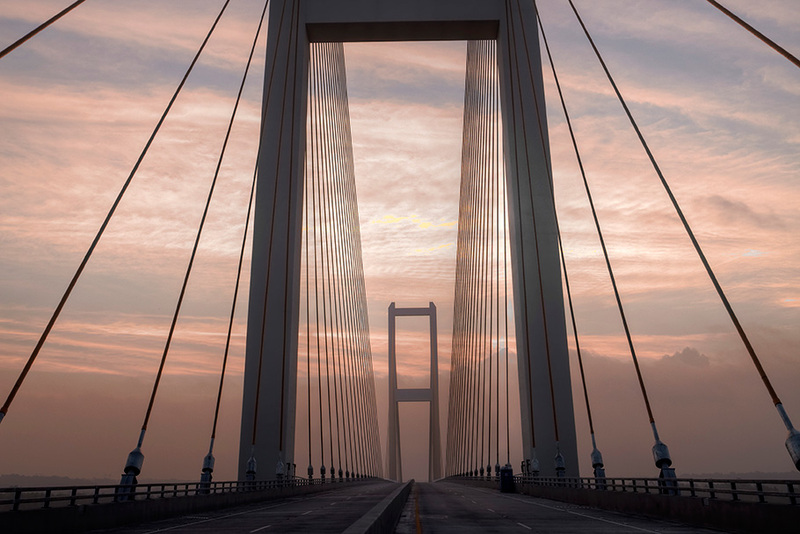
    <summary type="html"><![CDATA[<p><strong><em>John James Audubon was an influential figure in American ornithology, wildlife art, and natural science during the late eighteenth and early nineteenth centuries. However, even for his time, he was a controversial figure due to his shady academic practices and racism. Despite these darker aspects of his past, many organizations and locations across the country bear Audubon's name today to celebrate America's natural beauty and environmental conservation. The John James Audubon Bridge is no different.</em></strong></p><img src="https://acadianahistorical.org/files/fullsize/5de15e1a077f40f6c7aa21e91ce33ad4.jpg" alt="John James Audubon Memorial Bridge" /><br/><p><div><span>     The John James Audubon Memorial Bridge lies along Louisiana State Route 10, northwest of Baton Rouge. The bridge connects West Feliciana Parish to Pointe Coupee Parish, and its construction was completed in 2011. The structure was named after John James Audubon, who was an influential, American naturalist in the late nineteenth and early twentieth centuries. </span></div>
<div><span> </span></div>
<div><span>     Born in 1785, John James Audubon was the illegitimate child of Jeanne Rabine and Lieutenant Jean Audubon. Audubon was raised on his father’s sugar plantation until he was moved to France. He received a high-quality education, learning to ride, fence, dance, and play multiple musical instruments. In his free time, Audubon roamed the woods near his home, collecting and drawing the objects that caught his attention. He gained a particular interest in birds and began drawing the eggs, nests, and habitats of these creatures. Audubon’s father wanted his son to join the French Navy, so he sent him to a military school when he was twelve. However, working on the sea was not Audubon’s forte. He was not interested in mathematics and navigation, and working on the sea quickly made him seasick. Audubon failed his officer’s qualification test, so he had to return home, now free to pursue his true interest—birds and nature. </span></div>
<div><span> </span></div>
<div><span>     Audubon moved to America in 1803, and in 1808, he married Lucy Bakewell. After his marriage, Audubon spent several years traveling across America, painting the various species of birds he came across while moving between jobs. At the end of his travels, Audubon created his magnum opus—Birds of America. This series of artworks contained 453 life-sized paintings of North American birds, which were praised for their accurate and life-like depictions of their subjects. However, some of these works were met with controversy. </span></div>
<div><span> </span></div>
<div><span>     Audubon claimed that he discovered a new species of North American eagle named the “Bird of Washington” or Falco washingtonii. He published this discovery in 1826, which was a pivotal moment in his career, and without it, the Birds of America would never have taken flight. However, despite the importance of this bird to his success, Audubon was never able to produce a specimen that fit with his description and rendition even though he claimed he used a specimen he shot as a reference. </span></div>
<div><span> </span></div>
<div><span>     Additionally, several of Audubon’s works have been accused of plagiarism. These paintings were eerily similar to the drawings of another American ornithologist who preceded Audubon named Alexander Wilson. Audubon’s allegedly plagiarized works share similarities in composition and posing with Wilson’s drawings. When compared side-by-side, Audubon’s renderings were practically the same as Wilson’s, and the main difference between the works was that Audubon’s images were magnified and flipped. </span></div>
<div><span> </span></div>
<div><span>     Despite the controversies surrounding him, including his racist beliefs, John James Audubon is remembered as a pillar in American ornithology, wildlife art, and natural history. Many country-wide organizations and institutions now bear his name, and they have grappled with the fact that their namesake was a complicated figure. However, that issue does not stop these groups from continuing their pledge to protect and conserve America’s natural beauty and bird populations. Unfortunately, other locations and institutions choose to remember Audubon only for the Birds of America, allowing his muddier history to fade into obscurity, and the John James Audubon Memorial Bridge is no exception.</span></div></p><p><em><strong><a href="https://acadianahistorical.org/items/show/256">For more (including 6 images&#32;&amp;&#32;1 audio file) view the original article</a></strong></em></p>]]></summary>
    <published>2025-03-15T01:17:16+00:00</published>
    <updated>2026-03-04T22:42:50+00:00</updated>
    <link rel="alternate" type="text/html" href="https://acadianahistorical.org/items/show/256"/>
    <id>https://acadianahistorical.org/items/show/256</id>
    <author>
      <name>Emily Lindner</name>
    </author>
  </entry>
  <entry>
    <title type="html"><![CDATA[Tiger Tracks: SSG Robert &quot;Pete&quot; Sweat Memorial Highway : Louisiana Highway 10 ]]></title>
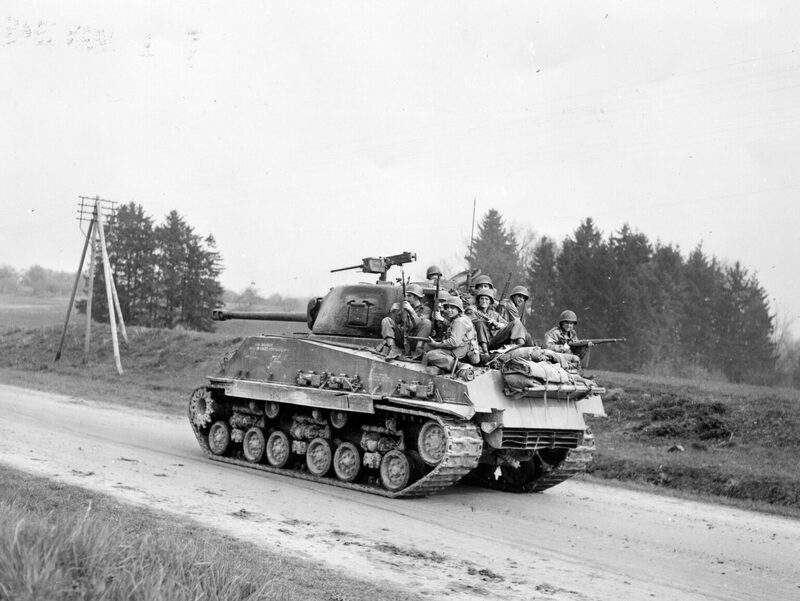
    <summary type="html"><![CDATA[<p><strong><em>Louisiana Memorial Highway number 113 is a portion of Louisiana highway 10 that runs until the location of the Occupy II Baptist Church in Pitkin, Louisiana and is designated as the SSG Robert “Pete” Sweat Memorial Highway as of August 15, 2011.</em></strong></p><img src="https://acadianahistorical.org/files/fullsize/51916a5384d9a48ccc5f89c06f789820.jpg" alt="Infantrymen catching a ride on a tank " /><br/><p><span>        SSG Robert E “Pete” Sweat was born to William Ephriam and Rosetta Perkins Sweat on October 28, 1920, on a farm in Pitkin, Louisiana. </span><span>He grew up assisting his father in their fields until his early 20s at the start of WWII. He trained at Fort Benning, Georgia, and was assigned to the 10</span><span>th</span><span> Armored Division of the 54</span><span>th</span><span> Infantry Regiment of the United States, also known as the “Tiger Division.” The 10</span><span>th</span><span> Armored Division was inactivated shortly after the war but operated under General George S. Patton in France. </span>
<span>     After receiving training with his division in September of 1944, Sweat and his squadmates ravaged the Germans in France, taking hundreds of Nazi prisoners. In the Ardennes Forest on December 16, 1944, the 10</span><span>th</span><span> Armored Division served as support for their comrades, mobilizing to Bastogne and the Bulge in Luxembourg. It is unsure where Sweat ended up during the Battle of the Bulge, but he survived this German counteroffensive and what ended up being the largest and deadliest battle fought by the U.S. in WWII. </span>
<span>     The next battle that Sweat and the 10</span><span>th</span><span> Armored Division would see was one at Heilbronn, a small city in southern Germany on the Neckar River, which was an important supply center for the German soldiers. The U.S. took the city and moved southward to Crailsheim, which is believed to be one of the most difficult battles of the war where the Germans would not let up. </span><span>This battle would last a few days, but Sweat’s life would come to an end on April 5, 1945. As enemy artillery fire hit targets and bullets whizzed through the air, one of Sweat’s squadmates was wounded in the line of fire. He swooped down to rescue him but was killed while returning to cover. </span>
<span>     The After Action report for April 1-5</span><span>th</span><span>, 1945 read “The enemy fought a delaying action entirely, using minefields covered by artillery and anti-tank weapons. Bridges were blown and artillery sighted in on important junctions and crossroads. Small arms fire ranged from light to moderate chiefly employed on outskirts of towns. Enemy tanks were in the area but moved about constantly. Towns which we occupied received light to moderate shelling to impede our progress. Results of Operations: 161 PoW captured, two 20mm. flak guns, four anti-tank guns, four trucks, two command cars and one prime mover captured or destroyed.”</span>
<span>      According to Sweat’s great nephew, who found a letter, Sweat was listed as “missing in action” on that date, but it became the official date of death for the family. </span><span>One of his nieces, Connie Britt, told The Leesville Daily Leader “the family attempted to find more information through the military records, but a 1973 fire at the National Personnel Records Center destroyed millions of files, including many of those relating to Sweat. ‘All they could tell us was that he was killed in action.’” </span>
<span>       After his death, the Allies won the war, and Sweat received a Purple Heart and two Silver Stars, the third-highest honor military personnel can receive. He is buried at Lorraine American Cemetery in St. Avold (Moselle), France. </span>
<span>      The SSG Robert "Pete" Sweat Memorial Highway was introduced by Representative Dorothy Sue Hill and signed by Governor Bobby Jindal. The Representative presented Sweat’s two sisters Mittie and Jean Cloud with a replica of the highway sign.</span></p><p><em><strong><a href="https://acadianahistorical.org/items/show/279">For more (including 10 images, 1 audio file,&#32;&amp;&#32;1 video) view the original article</a></strong></em></p>]]></summary>
    <published>2025-05-06T01:30:20+00:00</published>
    <updated>2026-03-04T22:42:51+00:00</updated>
    <link rel="alternate" type="text/html" href="https://acadianahistorical.org/items/show/279"/>
    <id>https://acadianahistorical.org/items/show/279</id>
    <author>
      <name>Kallie R. Barron </name>
    </author>
  </entry>
</feed>